
GMP & Pharmaceutical Manufacturing Expert
✓ Reviewed by: Pankaj Sharma - Quality Control Specialist
Reviewed for Quality Control accuracy, laboratory practices, analytical methods, and technical relevance
📅 Last Updated: October 31, 2026
This standard operating procedure (SOP) on inventory and storage of sieves, screens explains how Production checks each sieve/screen for integrity and records it in annexure-I. Production then allots a code and cleans it. You then cover it in a virgin polybag. Store sieves on the trolley and screens in the rack.
1.0 Objective: SOP on inventory and storage of sieves, screens
This SOP defines how Production receives, checks, codes, cleans and stores sieves and screens. The aim is that only intact, clean ones are used. To lay down a procedure for Inventory and storage of sieves, screens.
2.0 Scope
This procedure is applicable to Inventory management and storage of sieves, screens.
3.0 Responsibility
The Production Department staff and the Manager named below are responsible for this SOP.
- Operator, Officer, Executive – Production Department
- Manager – Production Department
4.0 Procedure
Section 4.1 covers inventory of the sieves/screens. Section 4.2 covers their storage.
4.1 Inventory
4.1.1 When stores informs Production that sieves/screens have been received, collect all of them from the packing material de-dusting area.
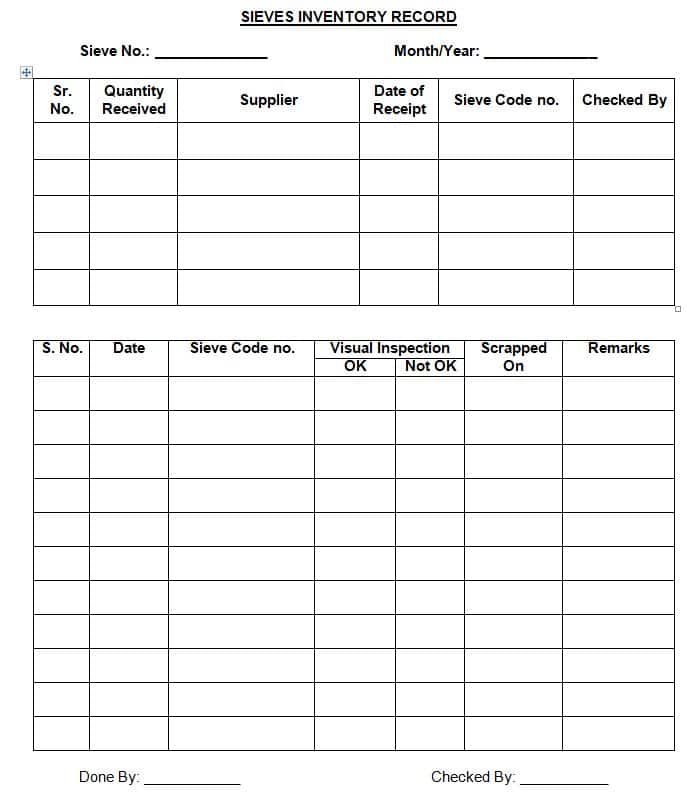
4.1.2 Check the integrity of individual sieves/screens and record the observations in annexure-I.
4.1.3 Mark sieves/screens that pass as ‘OK’. Mark sieves/screens that fail the integrity test as ‘Not OK’. Return the defective sieves/screens to stores.
4.1.4 Allot a code to each sieve/screen that passes, as per the Coding SOP. Then transfer it to the respective storage area.
4.1.5 Record the observations in annexure-I.
4.1.6 Clean the sieves/screens as per cleaning SOP. For new sieves/screens, see the SOP on cleaning of SS / HDPE containers, blender bins, pallets, new sieve / screen and accessories.
4.2 Storage
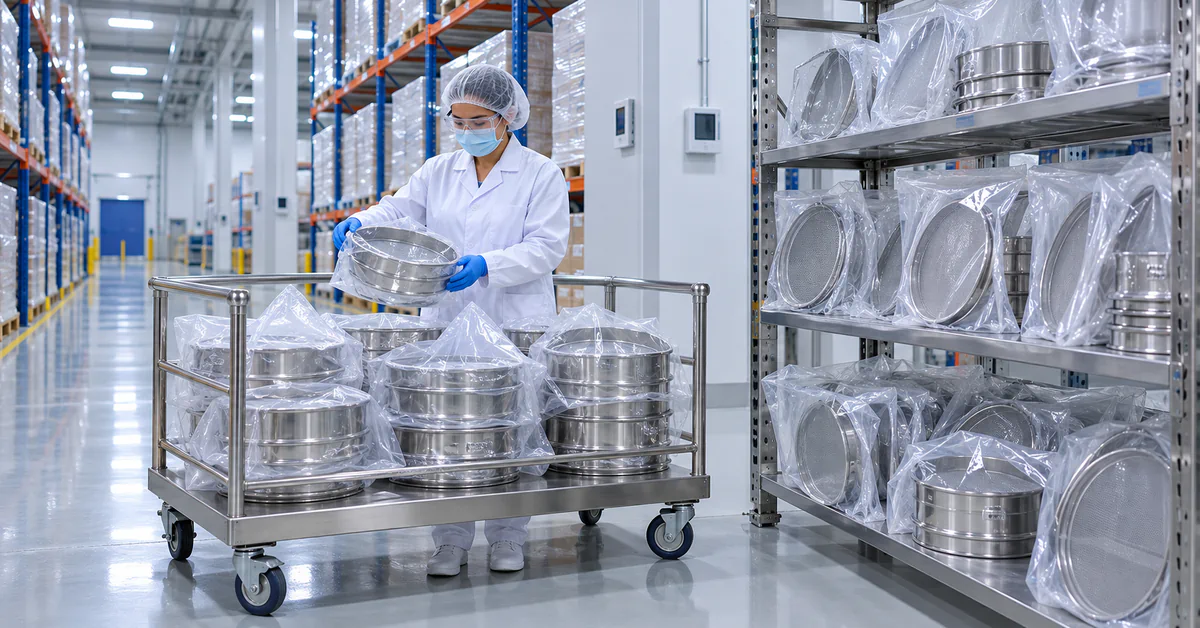
Cleaned sieves/screens go into a virgin polybag before storage, and you keep them on the trolley or in the rack. For related practice, see the SOP on Management of Sieves/ Screens / FBD bowl mesh.
4.2.1 Cover the clean and dry sieve/screen in a virgin polybag.
4.2.2 Ensure that the trolley is clean and dry before use.
4.2.3 Keep the covered sieves on the backside gap of the rectangular trolley.
4.2.4 Keep the covered screens in the rack.
4.2.5 After completing the activity, clean the sieve/screen and place it in a virgin polybag. Label it and store it as per steps 4.2.1 to 4.2.4.
5.0 Abbreviation(S):
This section lists the abbreviation used in this SOP.
SOP: Standard operating procedure
Annexure-1
Frequently Asked Questions
Production marks it ‘Not OK’ and returns it to stores. The integrity check means looking for damage to the sieve/screen, and you record the observations in annexure-I. Schedule M requires that equipment be maintained in a clean, fit condition and that its use be controlled. That is why you check each sieve/screen before use.
Cover the clean and dry sieve/screen in a virgin polybag. Keep the wrapped sieves on the backside gap of the rectangular trolley, and keep the wrapped screens in the rack. Use a clean, dry trolley. 21 CFR 211.67 requires that equipment be cleaned and maintained at suitable intervals and protected from contamination.
Allot a code to each sieve/screen that passes, as per the Coding SOP. Then transfer it to the respective storage area and record the observations in annexure-I. EU GMP Chapter 4 (Documentation) expects equipment records to be traceable. The code allotted in 4.1.4 and the entries in annexure-I give you that traceability.
When stores informs Production that sieves/screens have been received, collect all of them from the packing material de-dusting area. Then check the integrity of each individual sieve/screen, record the observations in annexure-I, and mark the ones that pass as ‘OK’.
References
- Schedule M, CDSCO, Drugs Rules, 1945
- 21 CFR 211.67, US Code of Federal Regulations (eCFR)
- EU GMP, European Commission, EudraLex Volume 4

Naresh Bhakar is the Founder and Author at Pharmaguddu.com, bringing his extensive expertise in the field of pharmaceuticals to readers worldwide. He has experience in Pharma manufacturing and has worked with top Pharmaceuticals. He has rich knowledge and provides valuable insights and data through his articles and content on Pharmaguddu.com. For further inquiries or collaborations, please don’t hesitate to reach out via email at [email protected].