
GMP & Pharmaceutical Manufacturing Expert
✓ Reviewed by: Pankaj Sharma - Quality Control Specialist
Reviewed for QC, QA accuracy, laboratory practices, analytical methods, and technical Documents
📅 Last Updated: November 12, 2026
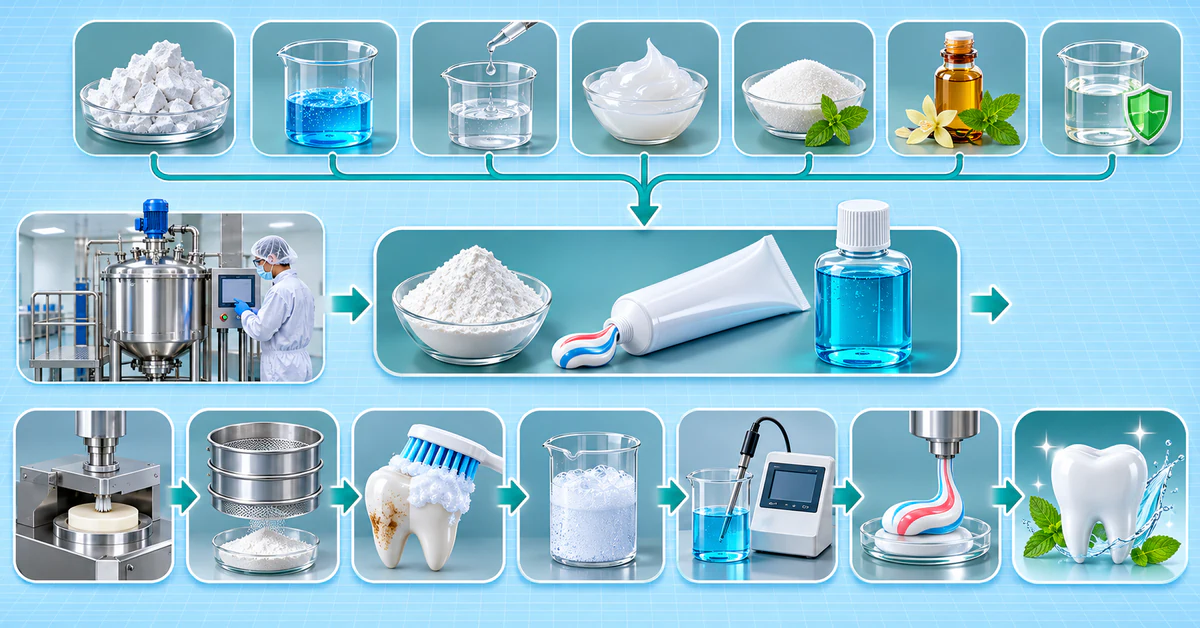
Dentifrices are preparations that cleanse the teeth of food debris, prevent calculus and plaque, polish the teeth and leave a refreshing feeling. The types are tooth powder, toothpaste and mouthwash. Formulations combine abrasives, detergents, humectants, binders, sweeteners, flavours and preservatives. Evaluation covers abrasiveness, particle size, cleaning, foaming, pH and consistency.
The sections below describe dentifrices; types, formulation, and evaluation, and these preparations also polish the teeth and leave a refreshing feeling in the mouth.
Types of Dentifrices
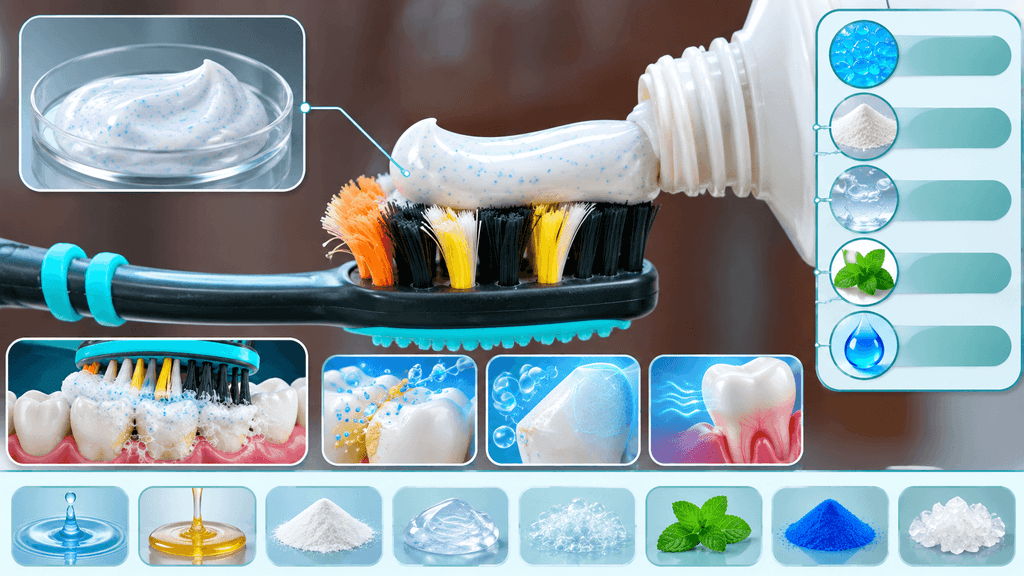
The main types of dentifrices are listed below, and each type is described in its own section.
- Tooth powder
- Toothpaste
- Mouthwash
Tooth Powder
Tooth powder is a powder for cleaning teeth. It contains abrasives, detergents and sweetening agents. A tooth powder needs an abrasive and a surfactant. It is meant to be dry, so it typically lacks the thickeners and humectants found in pastes. Other substances are also used.
The scientific and dental communities also recommend a fluoride-containing dentifrice. The primary goal of a dentifrice is to aid in the removal of dirt and plaque. Some brands also claim breath-freshening and tooth-whitening benefits.
Tooth Paste
Tooth powder can be used instead of toothpaste. Fluoride and non-fluoride versions are available.
The Romans made tooth powder from animal bones, hoofs and horns, crabs, eggshells, and oyster and murex shells. They burned these materials and ground them to a fine powder. They sometimes mixed it with honey.
Ground myrrh, niter and hart shorn were occasionally used as ingredients. Tooth powder was used to clean and whiten teeth, to secure them when they became loose, to strengthen gums and to relieve pain.
Mouths wash
Many mouthwashes promise to kill the bacteria that cause plaque or to refresh breath. They are normally used after brushing in their most basic form, but some brands recommend rinsing before brushing.
Dental studies say mouthwash should supplement brushing, not replace it. Plaque is sticky, so chemicals alone cannot remove it. Brushing is needed to separate the sticky proteins by hand.
Formulation of Tooth Powder
A tooth powder formulation consists of the following groups of agents:
- Abrasive and polishing agents
- Detergents and foaming agents
- Sweetening agents
- Flavouring agents
Abrasive and polishing agents: Calcium carbonate, dicalcium phosphate, tricalcium phosphate and sodium metaphosphates are the abrasive agents most commonly used in tooth powders.
Detergents and Foaming agents: Sodium lauryl sulfate, sodium lauryl sarcosinate, diethyl sodium sulfosuccinate, magnesium lauryl sulphate and soaps such as sodium palmitate are the detergents and foaming agents used in tooth powders.
Sweetening agents: Saccharin sodium is the sweetening agent most commonly used in tooth powders.
Flavoring agents: Flavouring agents include anise, peppermint, clove, cinnamon and spearmint oils.
Wetted tooth powder is toothpaste.
Formulation of Toothpaste
Toothpaste formulation is similar to tooth powder. The ingredients are grouped as follows:
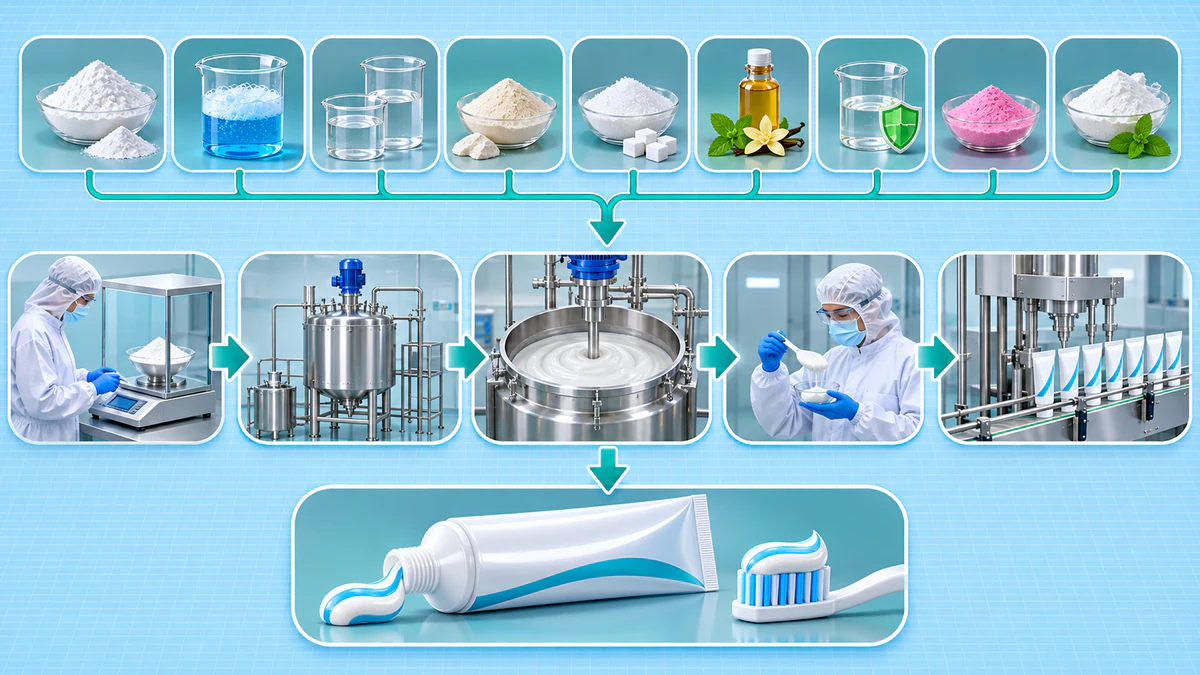
- Abrasives & polishing agents
- Detergents & Foaming agents
- Humectants
- Binding agents
- Sweetening agents
- Flavoring agents
- Preservatives
- Colour
- Miscellaneous: Anticaries agents; antibacterial agents; desensitizing agents
Pastes also contain humectants, binding agents and preservatives, which tooth powders do not usually contain.
Humectants: Glycerine, propylene glycol and sorbitol are usually added at 10-30% of the formula.
Binding agents: Binders in toothpaste include tragacanth gum, gum Arabic, karaya gum, sodium alginate, agar veegum, bentonite and others.
Preservatives: Preservatives such as methylparaben and propylparaben are mostly used. They prevent microbial growth, and the antimicrobial effectiveness test in United States Pharmacopeia (USP) <51> is used to show that a preservative works.
Anticaries agents: Sodium fluoride, sodium lauryl sarcosinate, etc. Are frequently used as anti-carcinogenic agents.
Anti-bacterial: Triclosan was formerly used in toothpaste, for example in gingivitis-protection pastes, and its use has declined. Colgate announced in 2019 that it would replace triclosan in Colgate Total.
Desensitizers: Potassium nitrate and strontium chloride are used to reduce teeth sensitivity to hot and cold.
Under Schedule M, dentifrices made as cosmetics or drugs in India must be produced under written, controlled procedures. Related reading on pharmaceutical suspension and pharmaceutical packaging is also available.
Related Post: Aerosol in Pharma
Evaluations
Dentifrice evaluation can follow general pharmacopoeial chapters, with pH measured as described in USP <791> and particle size by sieving covered in USP <786>.
Dentifrices are evaluated for:
- Abrasiveness
- Particle size
- Cleaning properties
- Foaming ability
- pH
- Consistency
FAQ: Frequently Asked Questions on Dentifrices
Dentifrices are toothpaste that is designed to clean the teeth of food debris, prevent calculus and plaque formation, and polish the teeth to give them a lustrous sheen.
Tooth powder, and Toothpaste
Precipitated calcium carbonate 39.5%
Glycerol 20%
Sodium Lauryl Sulphate 6.3%
Gum Tragacanth 0.4%
Sodium Saccharine 0.1%
Peppermint oil 1.2%
Water 32.5%
Toothpaste is a tooth powder wetted to make a paste, and its formulation is similar to that of tooth powder. Unlike tooth powders, pastes usually contain humectants, binding agents and preservatives, and methylparaben and propylparaben are the preservatives mostly used.
References
- Schedule M, CDSCO, Drugs Rules, 1945
- USP <791>, United States Pharmacopeia (USP–NF)
- USP <786>, United States Pharmacopeia (USP–NF)

Naresh Bhakar is the Founder and Author at Pharmaguddu.com, bringing his extensive expertise in the field of pharmaceuticals to readers worldwide. He has experience in Pharma manufacturing and has worked with top Pharmaceuticals. He has rich knowledge and provides valuable insights and data through his articles and content on Pharmaguddu.com. For further inquiries or collaborations, please don’t hesitate to reach out via email at [email protected].