Multimill Troubleshooting: Common Problems & Fixes
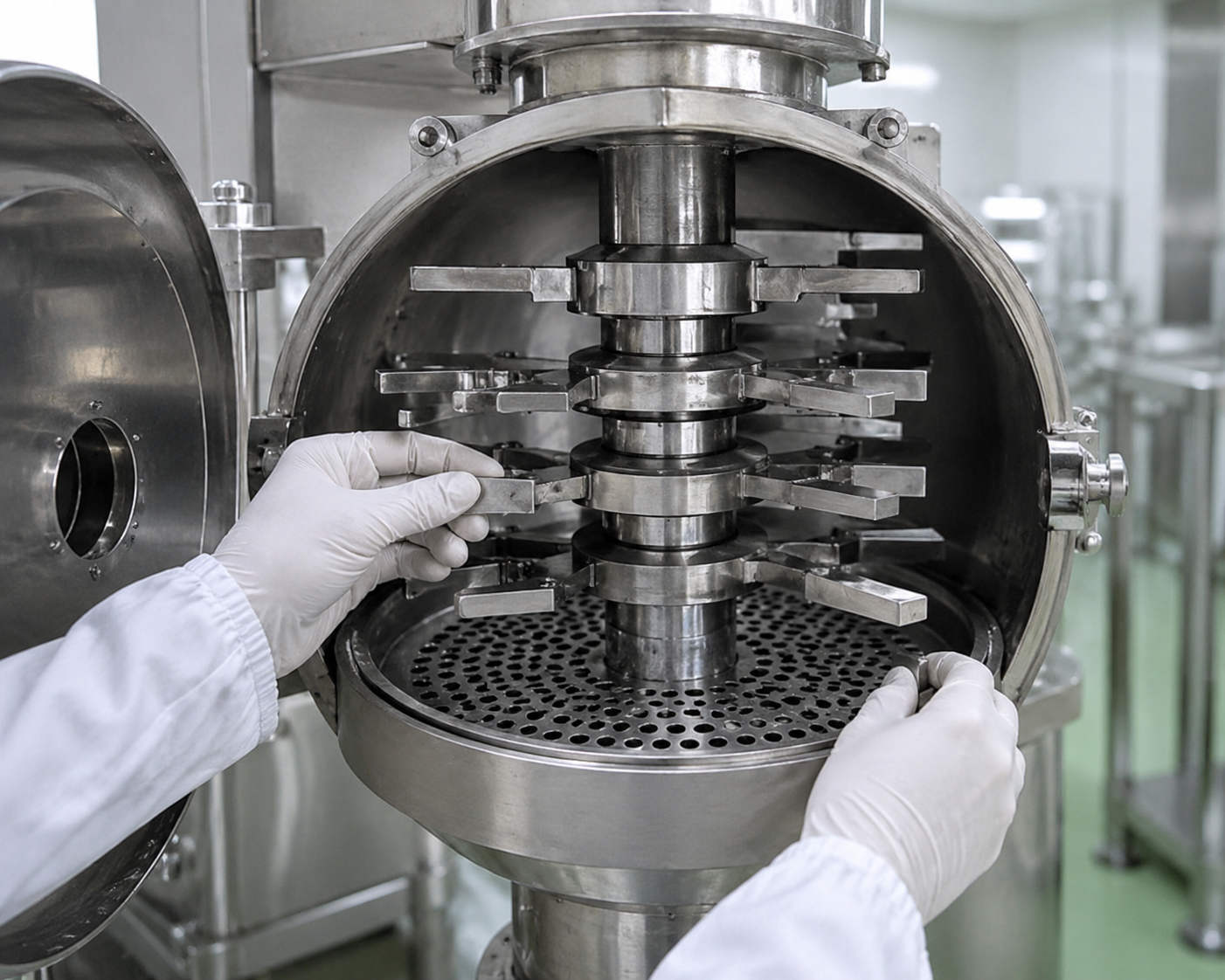
Multimill milling chamber with rotor blades, perforated screen, and stainless steel components

Most of the causes of multimill malfunctions such as oversized granules, excessive fines, screening problems, or motor overloads are related to blade dullness, incorrectly sized screens, or improper feed rates. In this article, you will find 8 failure modes with their potential causes and solutions for your pharmaceutical granulation process.

Colloidal Mill: Common Problems, Causes, and Troubleshooting Tips

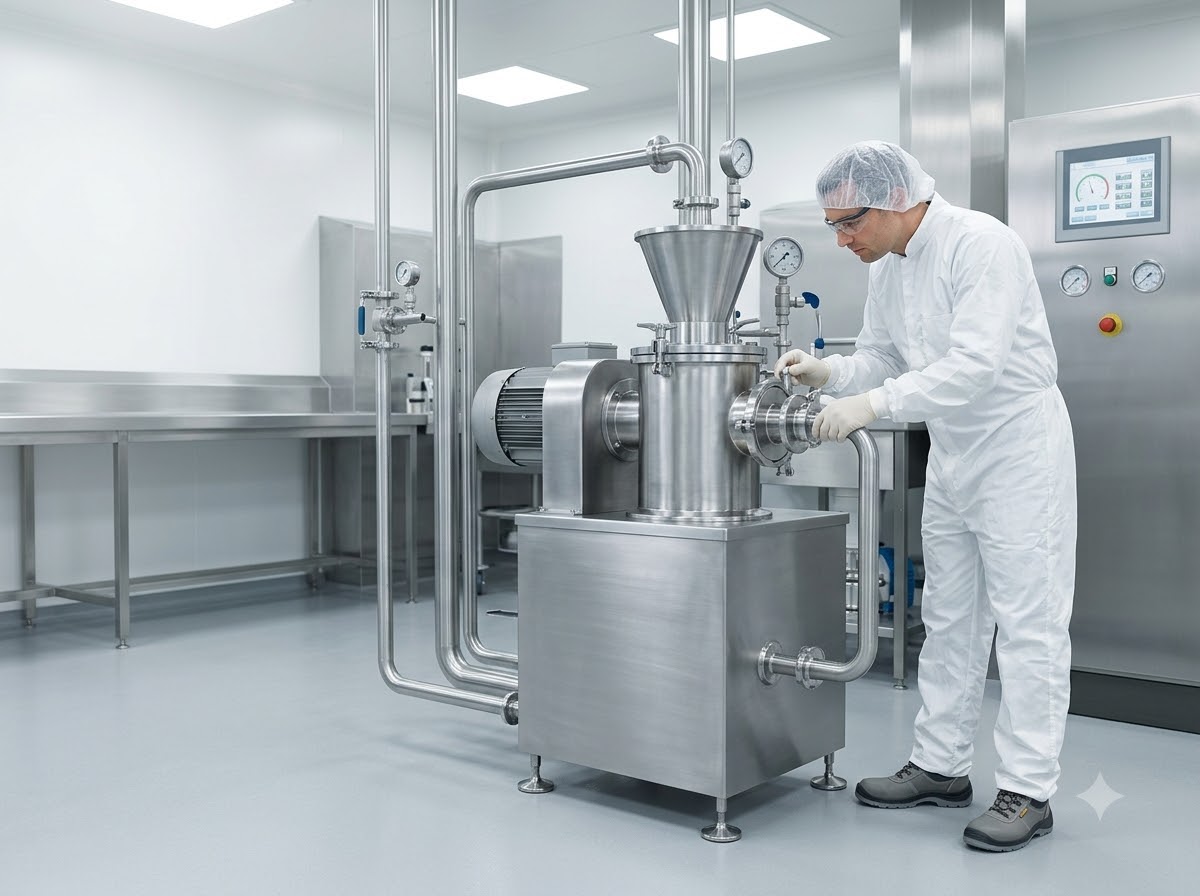
Pharmaceutical cleanroom equipment being inspected by a technician in protective clothing

Even a well-maintained colloidal mill experiences recurring issues that lead to malfunction eventually, and usually, there are only several common causes for that: the gap drift, rotor/stator wear, improper feed rate, or a faulty mechanical seal. Moreover, preventing the issues from arising is significantly simpler and less resource-consuming than addressing them after they occur. For … Read more

Equipment Capacity Calculation and Factor affecting in industries

Equipment Capacity Calculation

Equipment capacity means the minimum and max working capacity of any equipment that can be easy to operate with its predefined limit to get higher output. In pharmaceutical Equipment capacity calculation factor depends on the Bulk density of the excipients that are used in the granulation process. Factor affecting the equipment capacity Below are the … Read more

Aggregation and Disaggregation in Pharma

Aggregation and Disaggregation is an important aspect of pharmaceutical industries to get a product to be serialized. Aggregation in a simple way is the process of making Groups bundles of serialized Products. A Group bundle contains information about the products throughout the supply chain. This process makes forms a hierarchical, parent-child relationship through the process … Read more

Capsule Defects and Remedies During Filling Process

Capsules are solid dosage forms in which medicine or a combination of drugs, with or without excipients, is enclosed in Hard Gelatin Capsule Shells, soft, soluble gelatin shells, or hard or soft shells of any other acceptable material, in a variety of shapes and capacities. Normally, they are meant for oral consumption and contain a … Read more

Blister Defects and Remedies in Pharmaceutical

Blister Film is a plastic processing technique that involves heating a flat plastic sheet, applying a vacuum to mold a surface, and then cooling the mold before filling it. This technique is widely used in plastic packaging, lighting, advertising, and decoration. However, issues related to the quality of blisters and defects in Pharmaceuticals may arise … Read more

Technical Pharmaceutical Interview Questions/Answers

Providing brief and accurate answers to interview questions is crucial for success in the selection process. While it can be challenging to find answers to certain questions, it is important to familiarize yourself with pharmaceutical interview questions and their corresponding answers, tailored to the position level, before the interview. Pharmaceutical Interview Questions and Answers for … Read more

Top 10 Tablet Coating Problems and Remedies

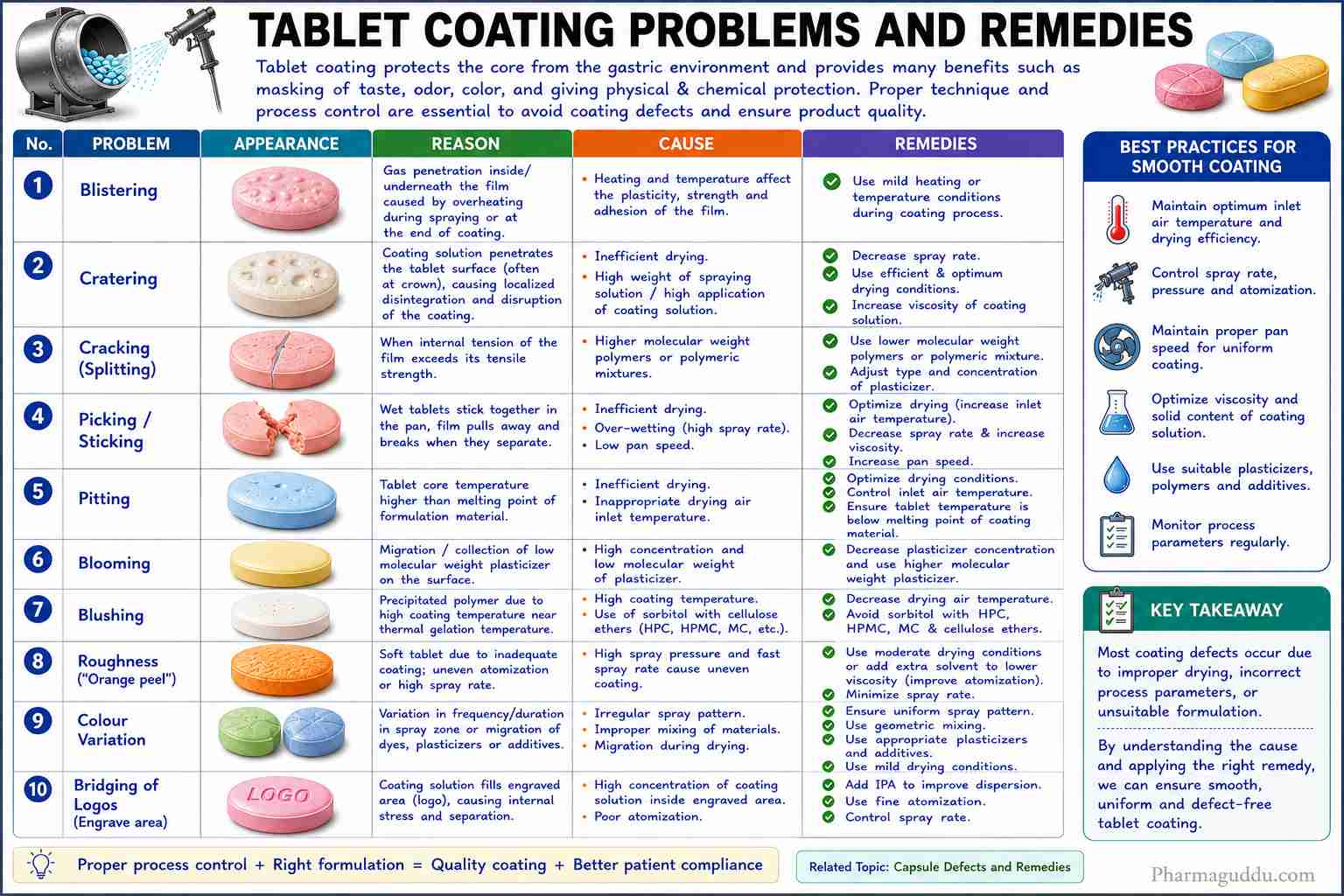
Infographic summarizing common tablet coating defects, their causes, and recommended remedies for pharmaceutical manufacturing

Tablet coating defects are a real headache in pharmaceutical manufacturing. When the coating process isn’t properly controlled, the consequences ripple through quality, appearance, and stability—sometimes all three at once. This guide breaks down the 10 most common tablet coating problems you’re likely to encounter: blistering, cratering, cracking, picking, pitting, blooming, blushing, roughness, colour variation, and logo bridging. For each one, we cover what’s actually causing it and what you can do to fix it—practical troubleshooting grounded in real manufacturing experience, not just theory.