
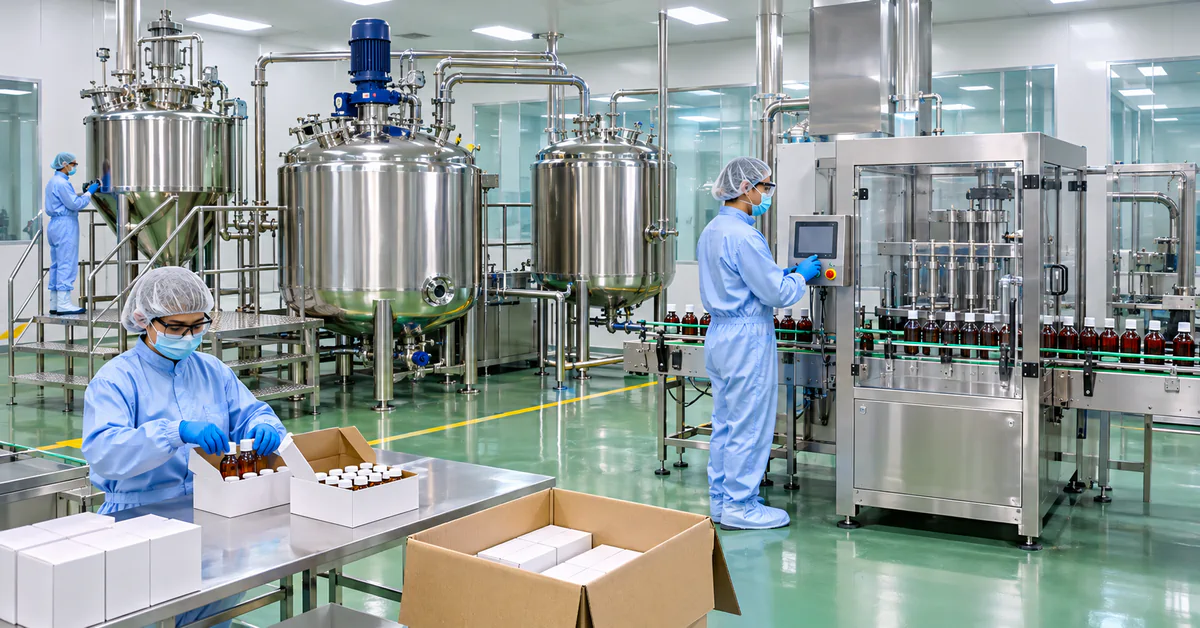
GMP & Pharmaceutical Manufacturing Expert
✓ Reviewed by: Naresh Bhakar
Reviewed for pharmaceutical accuracy
📅 Last Updated: November 21, 2026
Liquid syrup is a concentrated solution of sucrose in purified water, taken orally. The types are simple, medicated and flavoured syrup. Manufacturing starts with dispensing and weighing, then mixing in the production tank, and continues with filtration, storage in the storage tank, filling and packing.
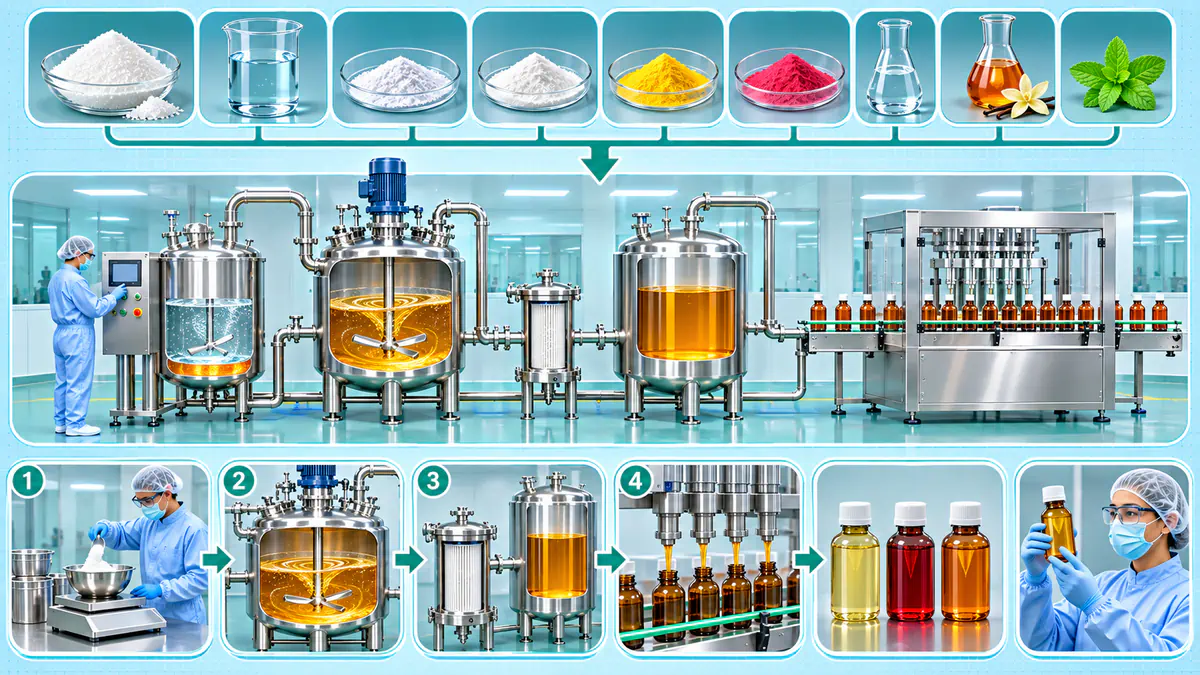
This guide explains liquid syrup types and manufacturing process, from simple syrup to filling and storage. Syrup is a liquid dosage form that is generally taken orally, and manufacturers mix the Active Pharmaceutical Ingredient (API) with the other ingredients and pack the syrup in bottles for dispensing.
Syrup is a concentrated or saturated solution of sucrose in purified water. It is taken orally as a liquid dosage form. The Indian Pharmacopoeia (IP) gives the sucrose concentration of simple syrup as about 66.7% w/w, and the United States Pharmacopeia (USP) gives it as 85 g in 100 mL (85% w/v); the two figures describe the same syrup in different units.
Types of Syrups in the Liquid Syrup Types and Manufacturing Process
Syrups are divided into three types according to their composition. The types are listed below.
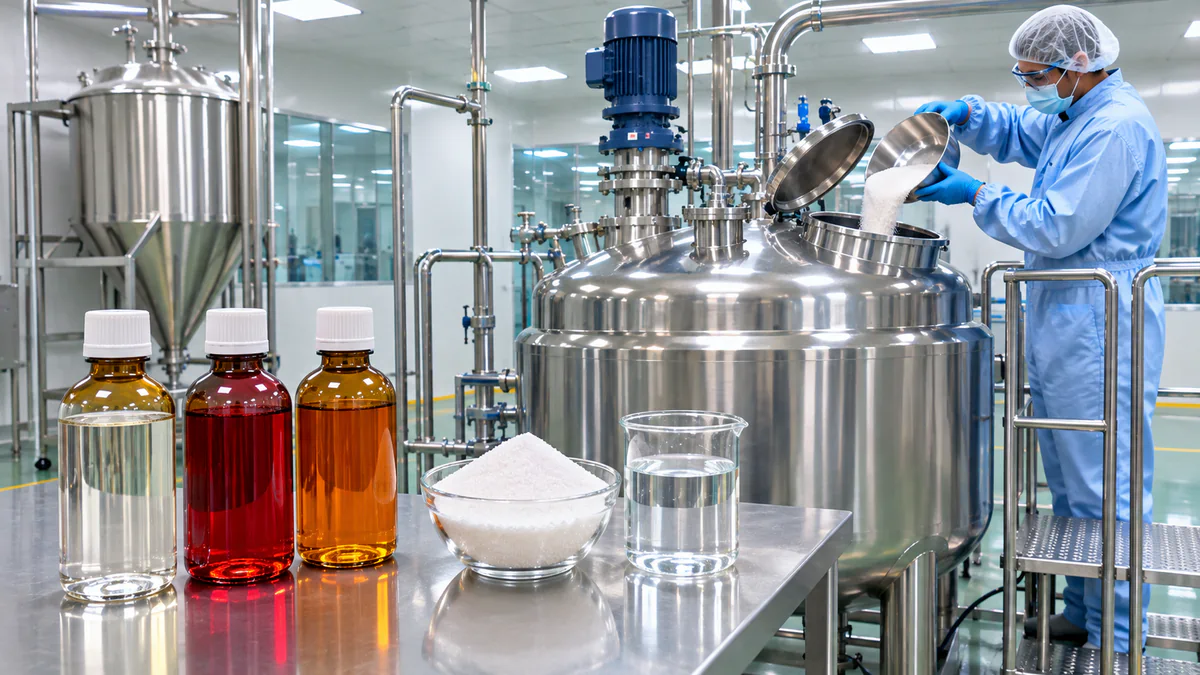
- Simple syrup
- Medicated syrup
- Flavoured syrup
1. Simple syrup:
Sucrose is added to purified water to make simple syrup.
Concentration: Simple syrup contains 66.7 grams of sucrose in 100 grams of finished syrup (66.7% w/w) as per IP, and as per USP, 850 grams of sucrose is made up with purified water to 1000 ml, which is 85 grams in 100 ml (85% w/v). The two figures describe the same syrup in different units.
2. Medicated syrup:
Medicated syrup contains an active pharmaceutical ingredient (API) together with excipients.
3. Flavoured syrup:
Flavoured syrup mainly contains aromatic or flavoured excipients.
Advantages of Syrup
Syrup offers preservative action, a pleasant taste and low manufacturing cost, and the main advantages are as follows.
Simple syrup is used as a preservative because it reduces bacterial and fungal growth due to high osmotic pressure.
Sucrose in syrup is partly hydrolyzed (inverted) into dextrose and laevulose, which are reducing sugars, and this reducing (anti-oxidative) effect can help retard oxidation of some ingredients.
Syrup is palatable because it masks bitter taste.
The liquid syrup is easy to manufacture at a low cost.
Disadvantages of Syrup
Syrup has some limits in clinical use, mainly related to speed of action and the route of administration.
- Onset of action is delayed.
- Syrup is not suitable for emergencies.
- Syrup is not suitable in gastrointestinal disorders.
- Syrup cannot avoid first-pass metabolism (breakdown of the drug in the liver before it reaches the blood).
Syrup Preparation Methods
Syrup is prepared by one of three methods: the simple solution method, percolation, or addition of medicated syrup, and the choice depends on the active substance.
1. Simple solution method:
This method is used for non-volatile and heat-stable materials or active substances.
Heating Method: Add the required amount of sugar to purified water and heat it until the solution is clear and viscous.
Agitation without Heating: This process is used when the active materials are volatile and heat sensitive, and sucrose and other excipients are dissolved in purified water by agitation, for example in Ferrous Sulfate Syrup USP.
2. Percolation:
Percolation is also called the cold manufacturing process. The sucrose is placed in a cylindrical percolator, on top of the cotton roll. Purified water is then passed through the sucrose continuously in small volumes, and the dissolved API is passed through last.
3. Addition of medicated syrup:
In this method, the active substances, fluid extract or tincture are added to the syrup. Adding them in this way may cause precipitation of alcohol-soluble materials due to dilution. To avoid this problem, first add the fluid extract or tincture to water. Let the mixture stand so the insoluble constituents separate. Then filter it and add sucrose to the filtrate. For example, Aromatic Eriodictyon Syrup NF (National Formulary) is prepared by this method.
Note: This process is only used when the insoluble materials are not active ingredients.
Simple Solution Method for Syrup: Heating vs Agitation Without Heating covers simple solution method syrup in more detail.
For more detail on addition of medicated syrup method, see Adding Tinctures and Fluid Extracts to Syrup Without Precipitation.
Formulation of Syrup
A syrup is formulated by combining a suitable vehicle with the API, together with the excipients listed below.
Vehicles: Purified water is used to prepare syrup.
Excipients:
A) Stabilizers like glycerin, sorbitol, and propylene glycol are added in the required quantity to prevent the crystallization of sucrose. Surfactants dissolve the ingredients in syrup to give a clear solution.
B) Coloring agents like coal tar dyes (amaranth, tartrazine, and Green S) give color to syrup.
C) Flavouring agents improve the flavour of syrups, for example tincture lemon, ginger, wild cherry, vanilla, and orange.
Preventing Sucrose Crystallization in Syrup: Glycerin, Sorbitol and Propylene Glycol covers sucrose crystallization in syrup in more detail.
Stages of Manufacturing Liquid Syrups
The liquid syrup manufacturing process runs through dispensing and weighing, mixing, filtration, storage, and filling. Schedule M requires dispensed materials to be weighed against the approved Bill of Material (BOM) before they go to the production area.
- Dispensing and Weighing: First, dispense the materials and weigh them as given in the BOM (Bill of Material). Then transfer them to the production area.
- Production Tank: The production tank is used to mix the materials. The sugar tank, the syrup manufacturing tank and the storage tank are connected to each other by a dedicated pipeline for transferring the materials. The sugar tank melts the sucrose. The manufacturing tank mixes all ingredients. The storage tank holds the final manufactured syrup, and its outlets transfer the liquid syrup to the filling machine.
- Filtration and Storage Tank: Filtration removes the precipitated materials, and the filtered solution then goes to the storage tank. In-process checks are carried out during these stages.
- Filling Area: The filling machine fills the liquid syrup into pre-cleaned bottles, which are then packed into a carton and a corrugated box. Cleaning of equipment and containers before use is required by 21 CFR 211.67 and by Schedule M, so the filling line and bottles are cleaned before each batch.
Storage of syrup
Syrup is stored as directed on the label, typically at controlled room temperature (20–25°C), in a tight container, protected from light. International Council for Harmonisation (ICH) Q1A(R2) sets the storage conditions used to justify the labelled storage temperature of a drug product, and the label storage statement applies.
For more detail on simple syrup concentration, see Simple Syrup Concentration: Sucrose and Purified Water as per IP and USP.
A separate guide explains percolation method for syrup: Percolation Method for Syrup: Cold Process Explained.
Frequently Asked Questions
Syrups are divided into three types based on composition: simple syrup, medicated syrup and flavoured syrup. Medicated syrup contains an active pharmaceutical ingredient together with excipients, while flavoured syrup mainly contains aromatic or flavoured excipients. Simple syrup is made from sucrose and purified water only.
As per IP, simple syrup contains 66.7 grams of sucrose in 100 grams of finished syrup (66.7% w/w). As per USP, it contains 85 grams of sucrose in 100 ml of finished syrup (85% w/v), which is the same syrup in different units, and the syrup is then used as a preservative because of its high osmotic pressure.
A concentrated sucrose solution has a high osmotic pressure, which reduces bacterial and fungal growth, so simple syrup is used as a preservative. The property is listed among the advantages of syrup, together with its palatability and low manufacturing cost, and the dextrose and laevulose formed by partial hydrolysis (inversion) of sucrose are reducing sugars, which can help retard oxidation of some ingredients.
Percolation is also called the cold manufacturing process. Sucrose is placed in a cylindrical percolator on top of the cotton roll, and purified water is passed through it continuously in small volumes. The dissolved API is passed through last. It is one of the three methods of syrup preparation, together with the simple solution method and addition of medicated syrup.
To prevent the crystallization of sucrose, stabilizers such as glycerin, sorbitol and propylene glycol are added in the required quantity. Surfactants dissolve the ingredients in the syrup, which gives a clear solution, and coloring agents and flavouring agents are also added as excipients, to give color and to improve the flavour of the syrup.
References
- Indian Pharmacopoeia, Indian Pharmacopoeia Commission
- USP, United States Pharmacopeia (USP–NF)
- Schedule M, CDSCO, Drugs Rules, 1945
- 21 CFR 211.67, US Code of Federal Regulations (eCFR)

Naresh Bhakar is the Founder and Author at Pharmaguddu.com, bringing his extensive expertise in the field of pharmaceuticals to readers worldwide. He has experience in Pharma manufacturing and has worked with top Pharmaceuticals. He has rich knowledge and provides valuable insights and data through his articles and content on Pharmaguddu.com. For further inquiries or collaborations, please don’t hesitate to reach out via email at [email protected].