
GMP & Pharmaceutical Manufacturing Expert
✓ Reviewed by: Pankaj Sharma - Quality Control Specialist
Reviewed for Quality Control accuracy, laboratory practices, analytical methods, and technical relevance
📅 Last Updated: May 16, 2026
1.0 Scope: This procedure is applicable to check the clarity of sample solution.
Learn: Laboratory Color Test Procedure
2.0 Apparatus:
- Test tube
- 100 Volumetric flask
- 25 ml measuring cylinder
- 10 ml graduated pipette
- Flat-bottomed colour-matching test tubes
3.0 Reagents:
- Hydrazine sulphate AR grade
- Hexamine AR grade
4.0 Method:
4.1 Preparation of Standard Suspension:
First, take 1.0 g of hydrazine sulphate. Dissolve it in enough purified water to make exactly 100.0 ml. Leave the mixture aside for about 6 hours. Next, take 25.0 ml of this solution and mix it with 25.0 ml of a 10.0% w/v hexamine solution.
Stir well and let it stand for 24 hours. Store the mixture in a glass container with a smooth inner surface. This keeps the suspension from sticking to the glass.
Stored this way, it stays stable for around 2 months. To make the final standard suspension, take 1.5 ml of the well-mixed stock and dilute it to 100 ml using purified water. Use this final suspension within 24 hours of preparation.
Related SOP: SOP for Manual Visual inspection of filled vials
4.2 Opalescence Standards:
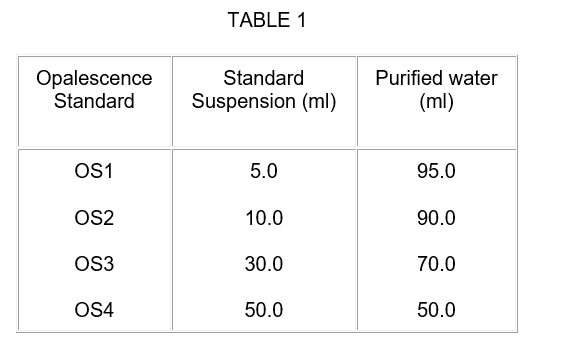
Mix measured portions of the standard suspension with purified water. Follow the exact ratios listed in Table 1. Shake each standard thoroughly before use.
4.3 Procedure to check Clarity of Sample Solution:
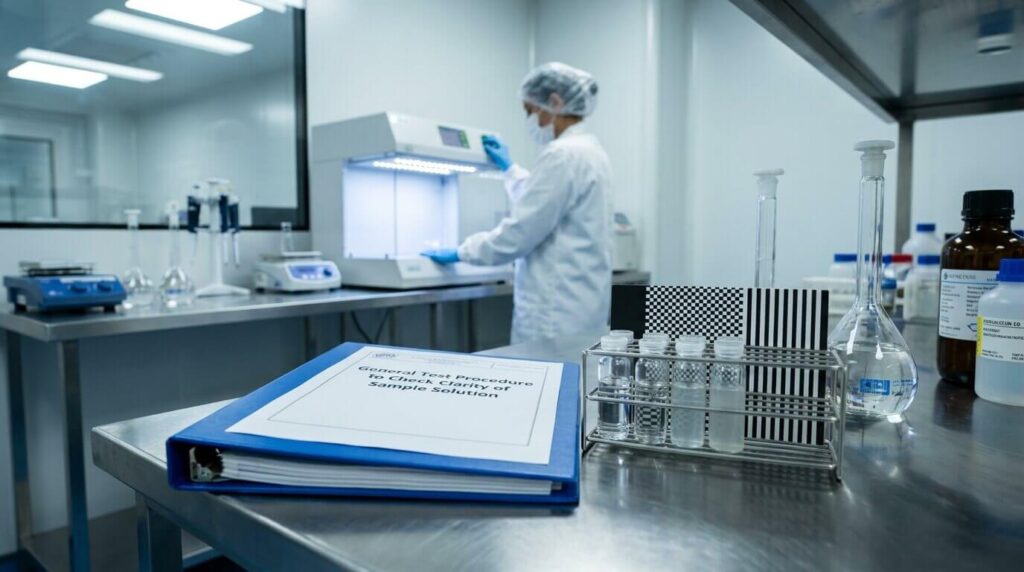
Pour the sample solution into a neutral glass test tube. The tube must have a flat bottom and a diameter between 15 and 25 mm.
Fill it until the liquid reaches a depth of 40 mm. Take a second, matched test tube and add the exact same volume of a freshly made opalescence standard. Wait for 5 minutes. Then, place both tubes against a black background.
Look down through them under diffused light to compare the two.
4.4 Clarity or opalescence:
State the result by naming the matching opalescence standard. The liquid is considered clear if it matches the look of purified water or the original solvent. It is also clear if its cloudiness does not exceed the limit set by opalescence standard OS1.
5.0 Reference: IP-1996 (Appendix 6 , page A-78)

Naresh Bhakar is the Founder and Author at Pharmaguddu.com, bringing his extensive expertise in the field of pharmaceuticals to readers worldwide. He has experience in Pharma manufacturing and has worked with top Pharmaceuticals. He has rich knowledge and provides valuable insights and data through his articles and content on Pharmaguddu.com. For further inquiries or collaborations, please don’t hesitate to reach out via email at [email protected].