Media Fill Failure Investigation: Root Cause Analysis and CAPA in Pharmaceuticals
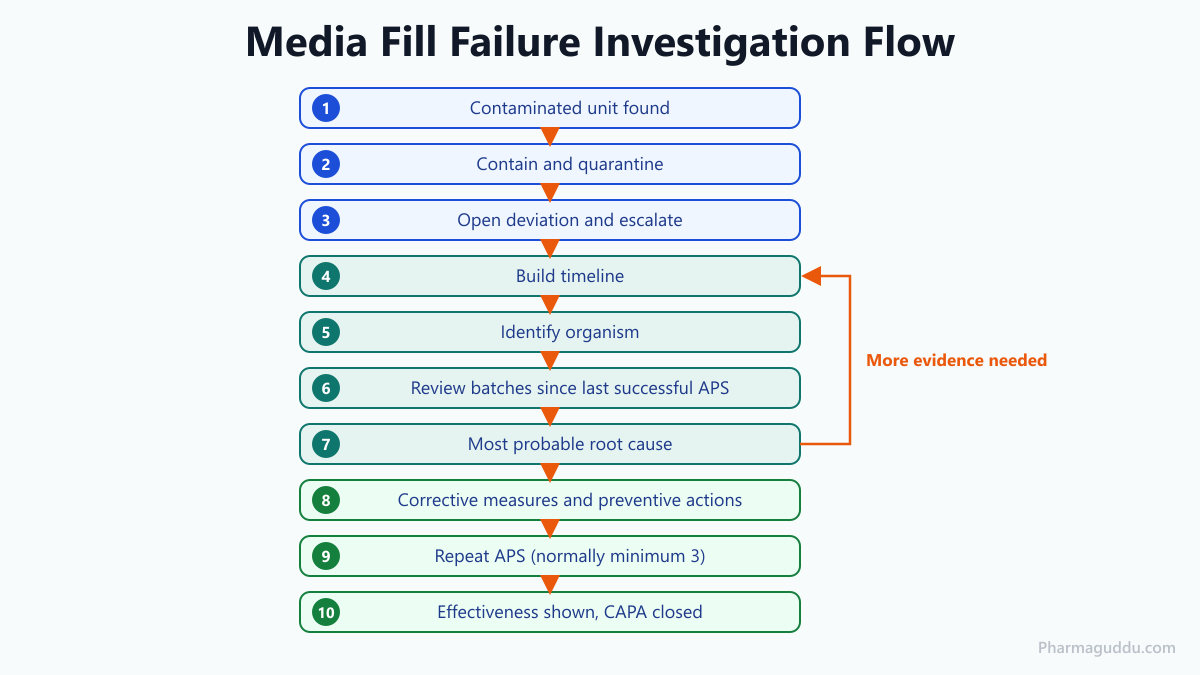
How to investigate a failed media fill: contain the line, find the most probable root cause, review earlier batches, choose CAPA and plan the repeat APS.

How to investigate a failed media fill: contain the line, find the most probable root cause, review earlier batches, choose CAPA and plan the repeat APS.
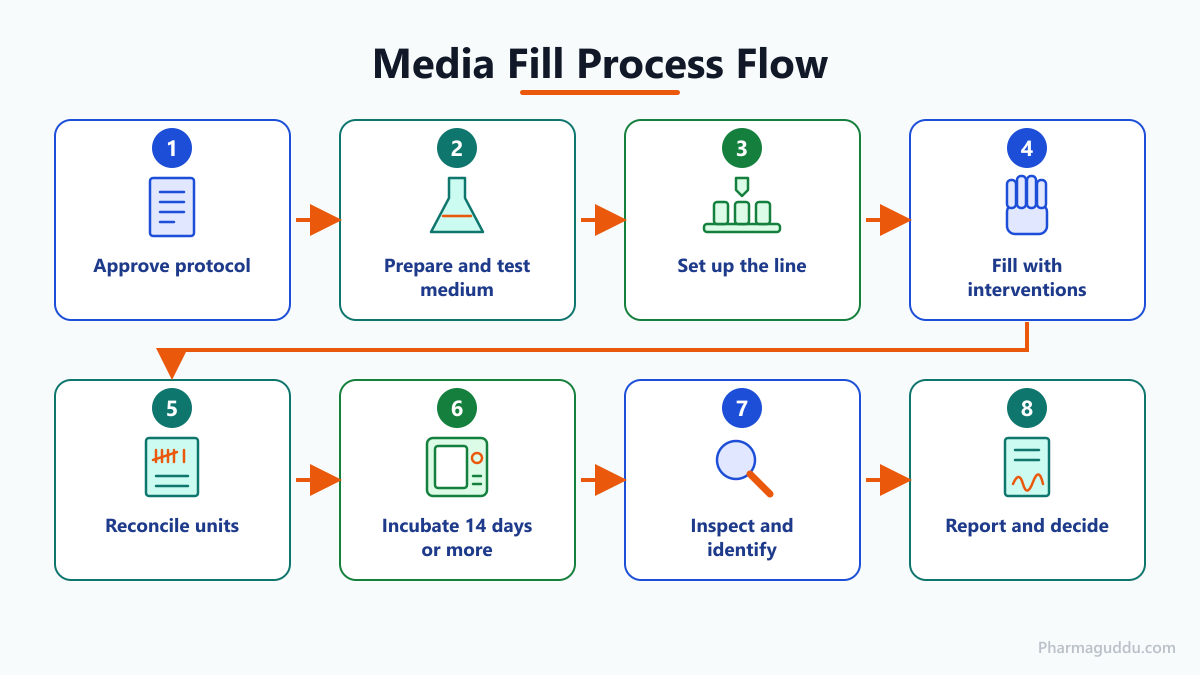
How a media fill is planned, run, incubated, evaluated and approved, with the Annex 1 and FDA rules for acceptance, failure and requalification.
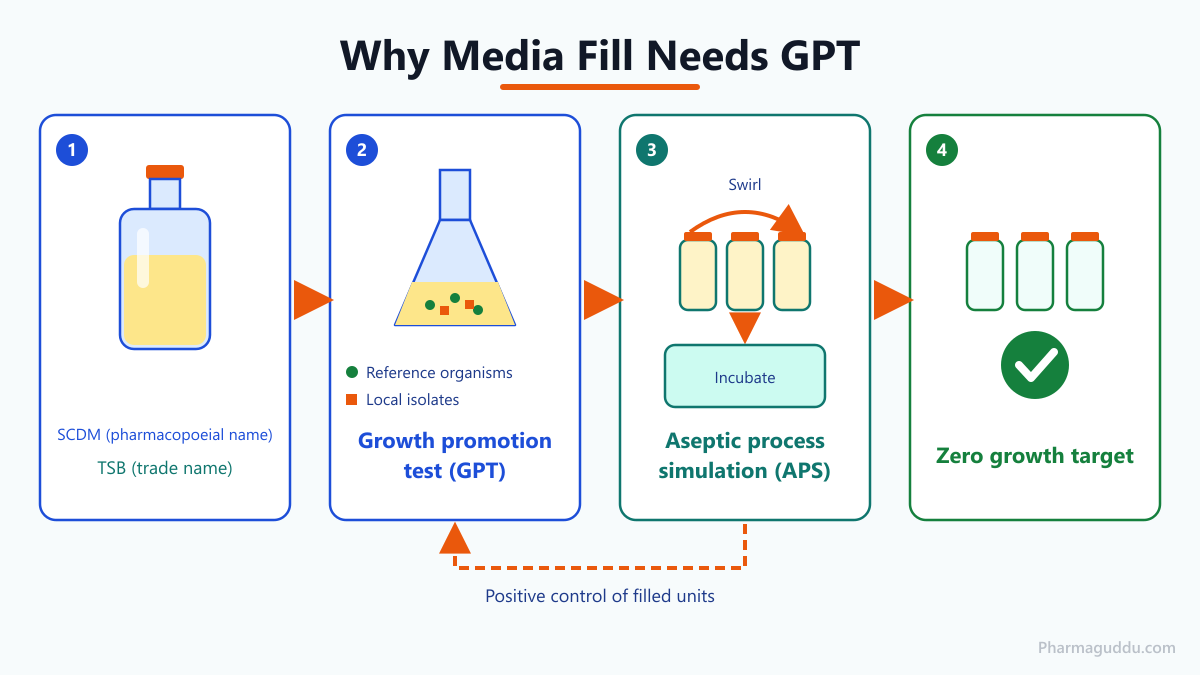
SCDM and TSB are one type of medium. See how growth promotion testing proves it in media fill, what Annex 1 and FDA say, and where 3% fits.
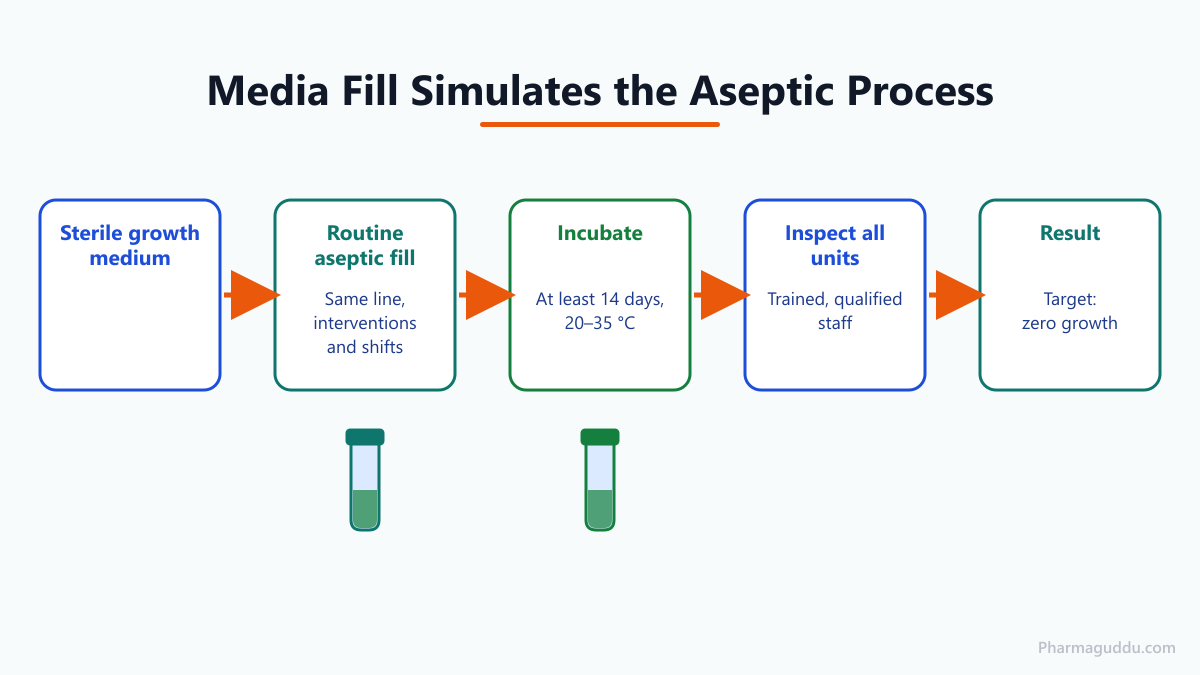
Media fill (aseptic process simulation) runs growth medium through an aseptic process to show it keeps microbes out. Steps, limits, frequency and failures.
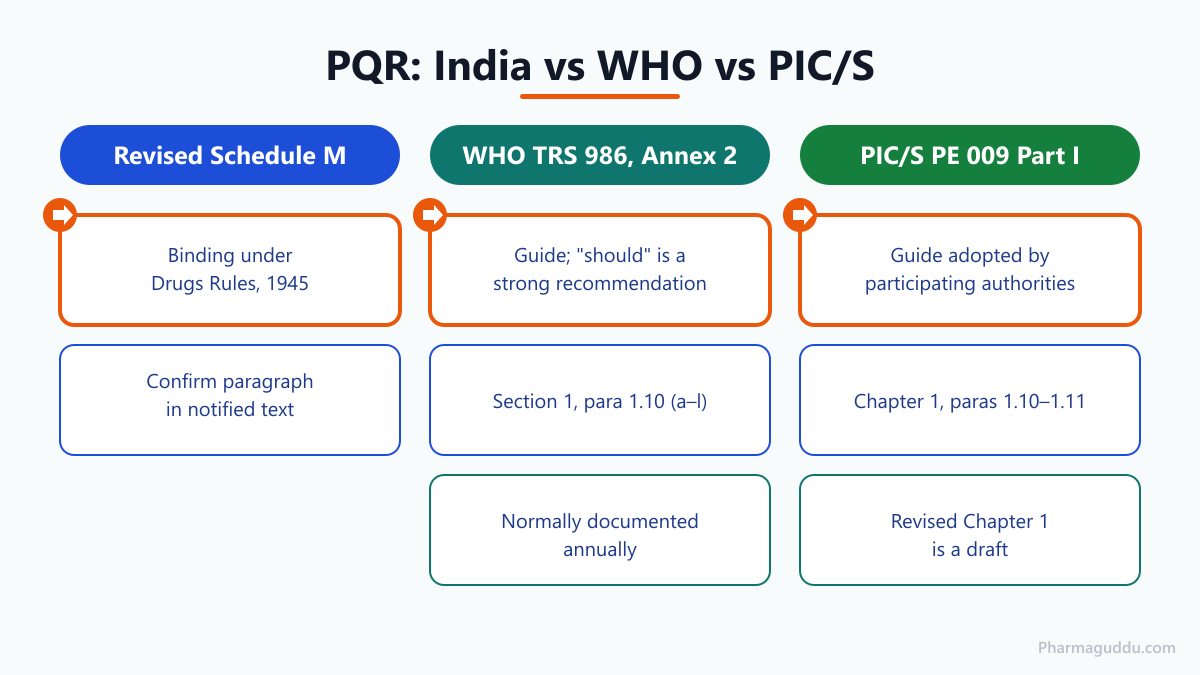
How PQR rules differ in revised Schedule M, WHO TRS 986 and PIC/S PE 009, and how to turn review conclusions into tracked CAPA actions.
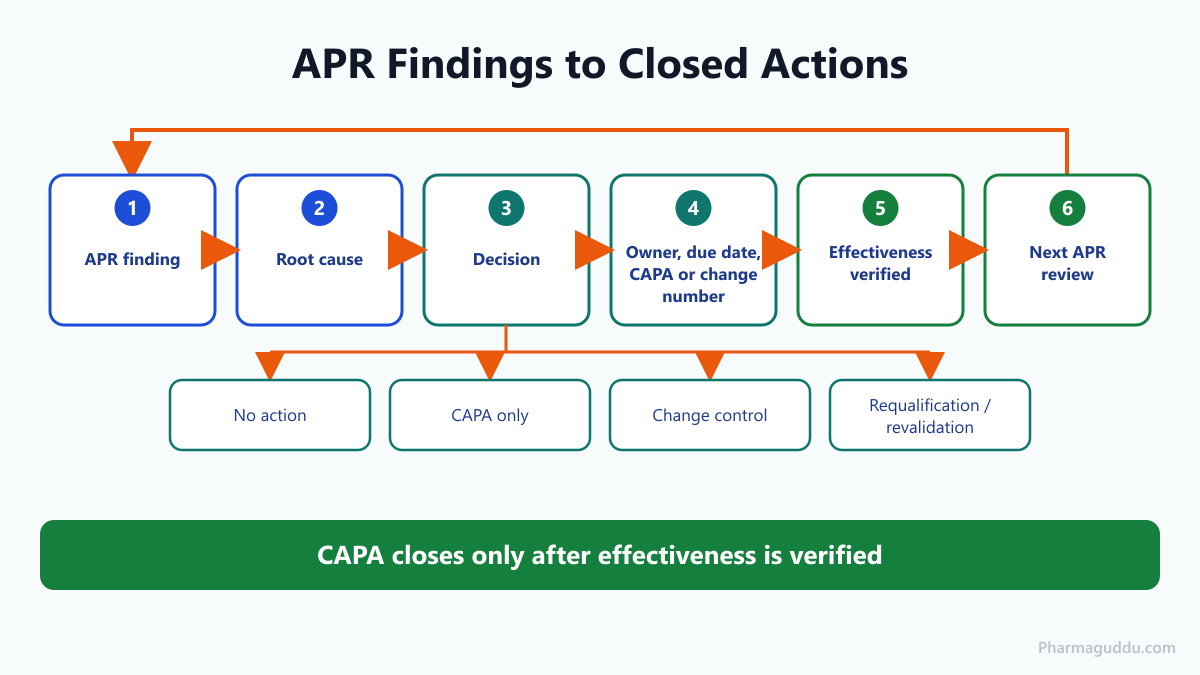
Turn each APR finding into a clear decision (no action, CAPA, change control or revalidation) and track every action to closure.
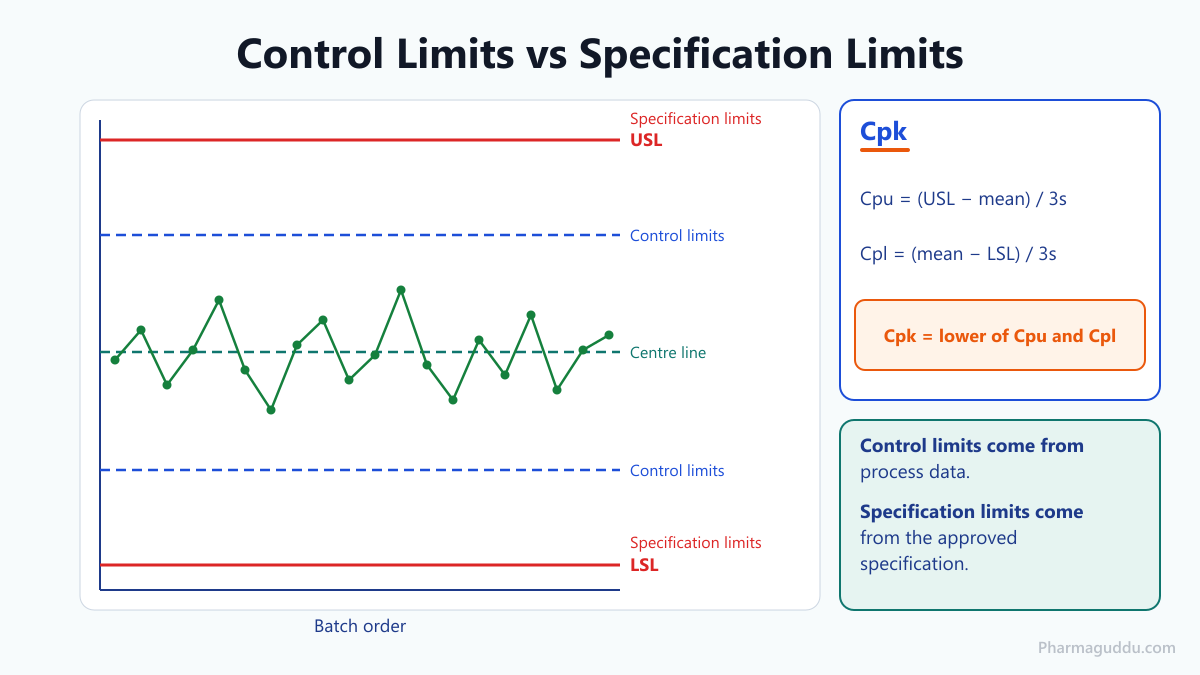
How to trend batch data in an APR: choose the control chart, check stability, calculate Cpk with a worked example and write a clear conclusion.
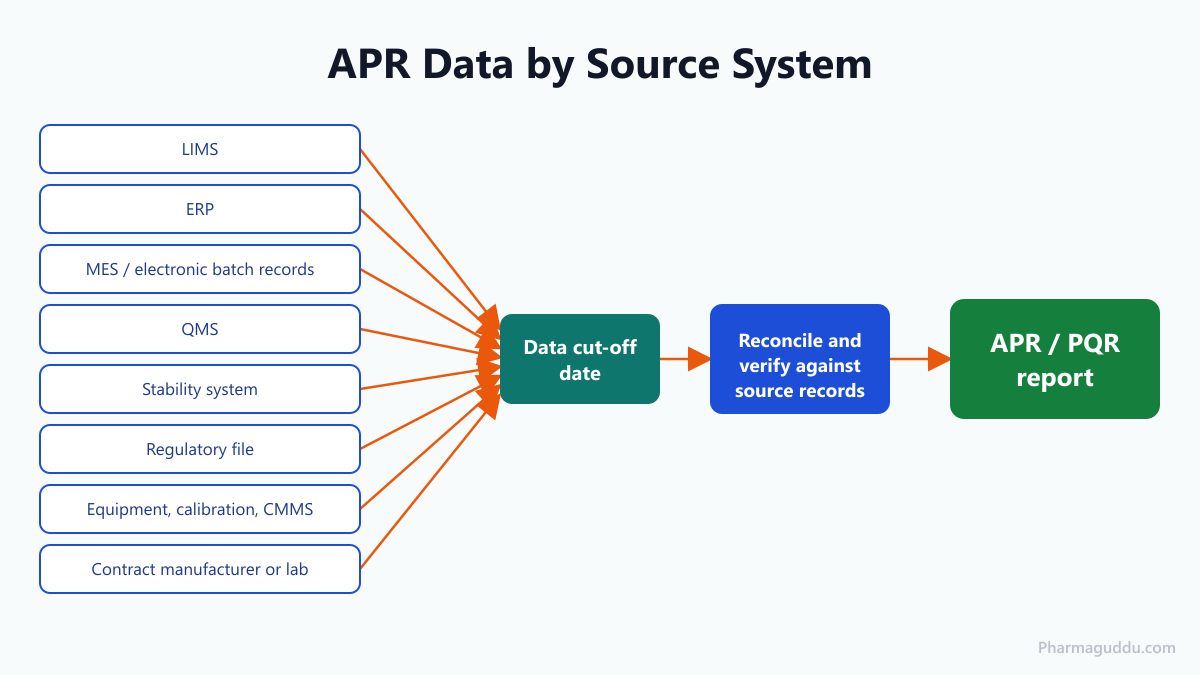
A practical APR data checklist by source system: what each system supplies, who owns it, and the check that proves the data are complete.
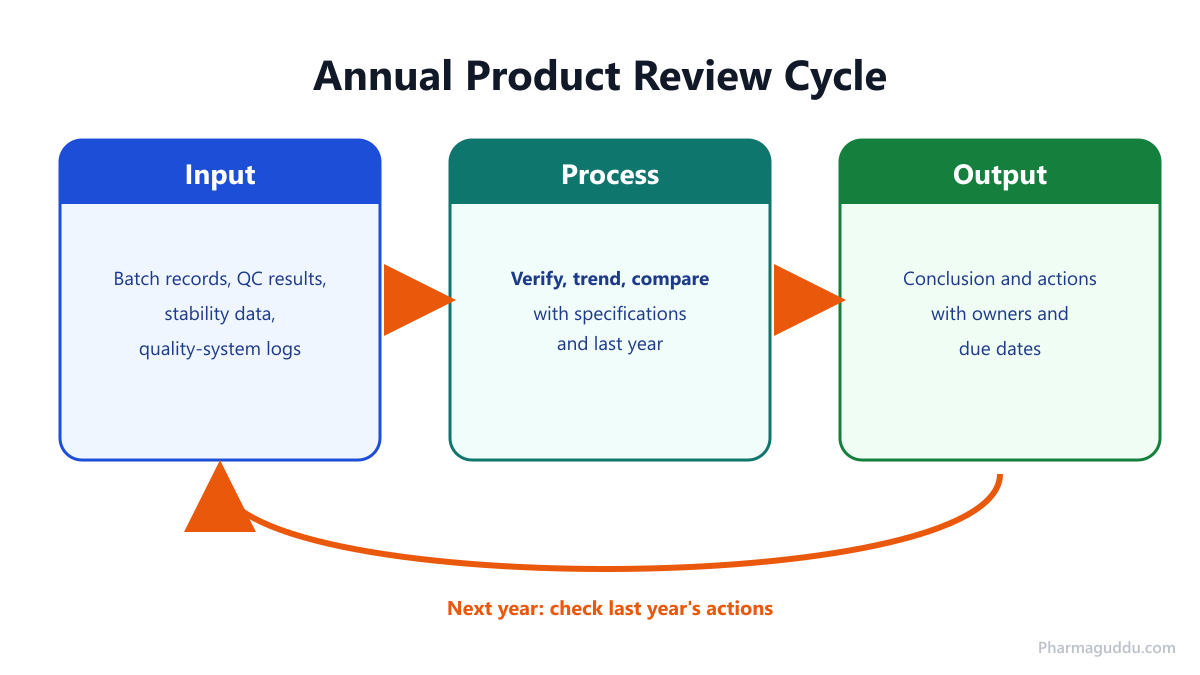
An annual product review (APR / PQR) checks a year of quality data for each product. Learn what to include, how to trend it and how to act on the results.
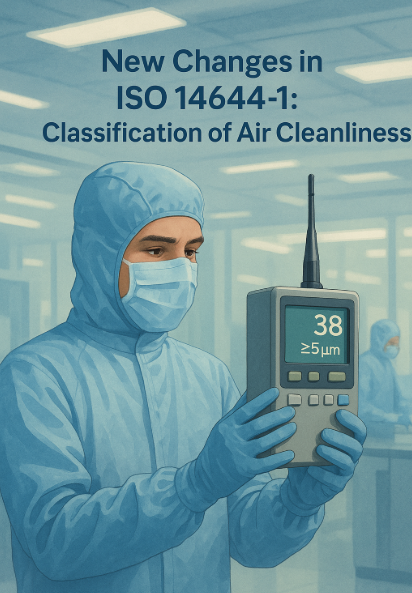
The ISO 14644‑1 standard (2015 edition) is the global benchmark for cleanroom air cleanliness, defining nine classes (ISO Class 1–9) based on airborne particle counts. Each class sets maximum concentrations of particles ≥0.1, 0.2, 0.3, 0.5, 1.0, or 5.0 μm in a cubic meter of air. In practice, lower class numbers mean cleaner environments. For example, ISO Class 5 (used in … Read more

Below is a summary of the 10 most frequently observed audit findings in pharmaceutical manufacturing plants, followed by detailed descriptions, examples, preventive strategies, and relevant industry keywords. Each issue is based on industry reports and regulatory inspection data. Common Audit Finding: 1. Documentation and Record-Keeping Deficiencies: Deficiencies in documentation and records, such as missing or … Read more
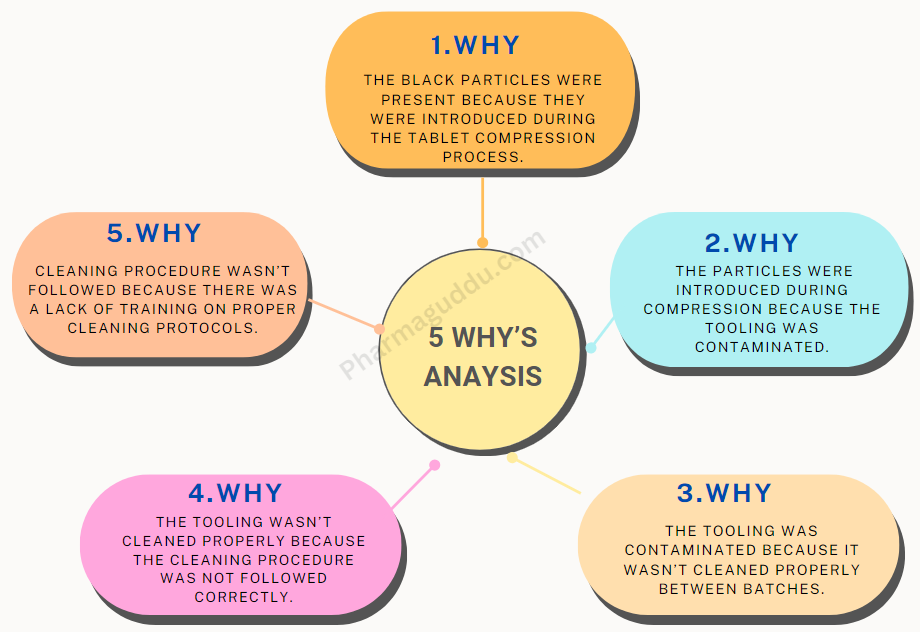
The Why-Why analysis is considered to be a problem-solving approach that is mainly incorporated within the pharmaceutical industry so as to get to the root of the problems. It is a basic technique in which the why is asked Frequently until the real problem is found. This applies to the why-why technique the root cause … Read more
A Non-Conformance Report is issued when anything deviates from the standard required parameters for a product or components during the inspection periods by the Quality department. On deviating from the process parameters, a Quality person issued a document known as a Non-Conformance Report. NCR Definition: A Non-Conformance Report is a document that is used to … Read more
Learn About Standard Operating Procedure for Handling of Deviations in pharmaceuticals | Types of deviations | Deviation Flow chart | Devations Guidelines | Deviation Numbering | Deviation management. 1.0 OBJECTIVE: 1.1 To lay down that deviations from manufacturing instructions and quality-related procedures are recorded, investigated, and evaluated for their impact on product quality in a … Read more
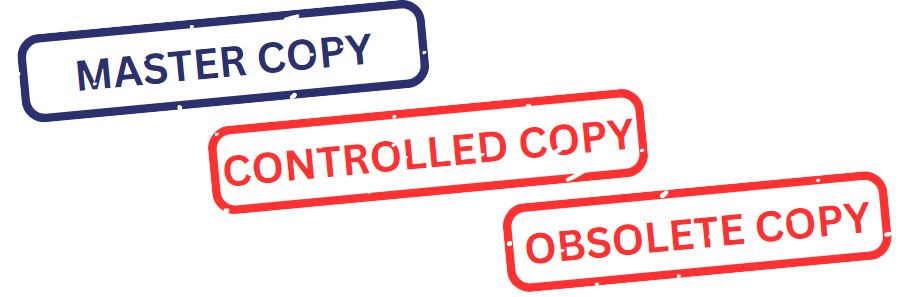
Below learn about the List of Stamps, Colors and Types of Document Copies (Master, Controlled, and Obsolete Copy) and the difference between Controlled documents and uncontrolled Documents used in the Pharmaceutical documents system. Types of Document Copies in Pharmaceuticals: Master Documents: The originally approved copy of a document Is marked as a “MASTER COPY” stamp … Read more
When the process of moving technology including (Chemicals, Production/ Manufacturing, Control, and drug product-related documents) from one place to another, so we can make the same good stuff every time, that’s called technology transfer. Below is the full Checklist of Technology Transfer For Sending the Plant. Project identification No. — Name of Product — Technology … Read more