OOE (Out of Expectation) in Pharma QC?
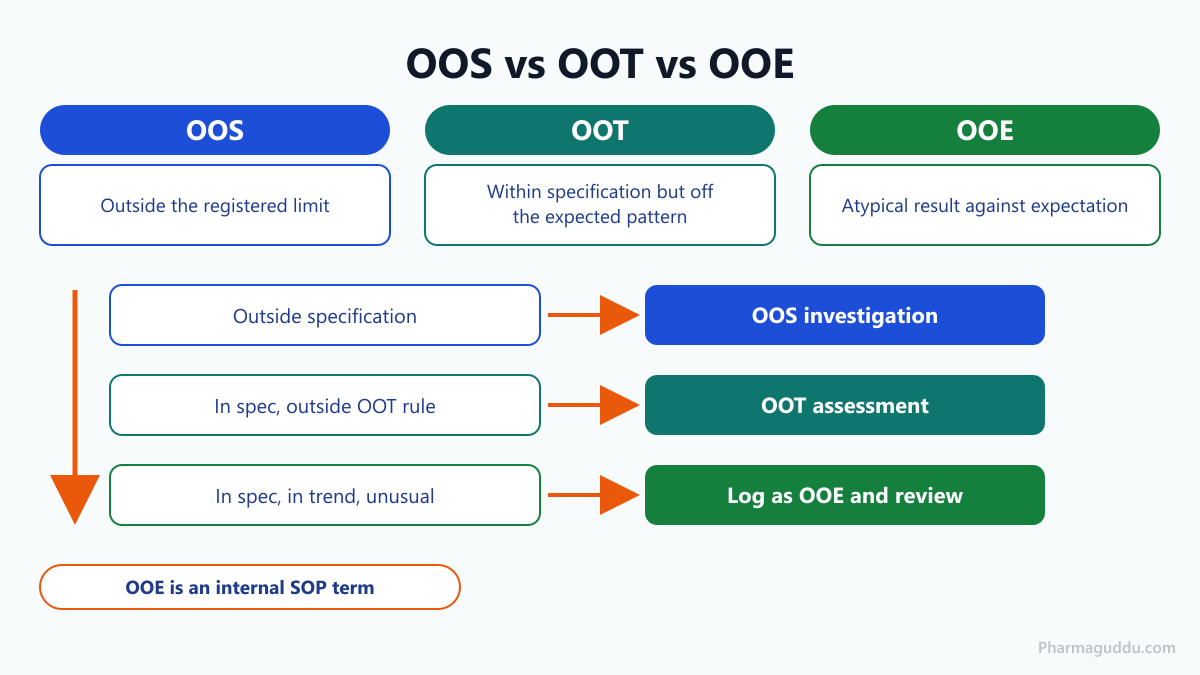
OOE means an in-spec result that looks unusual. See how it differs from OOT and OOS, with an HPLC peak example and a simple review process.

OOE means an in-spec result that looks unusual. See how it differs from OOT and OOS, with an HPLC peak example and a simple review process.
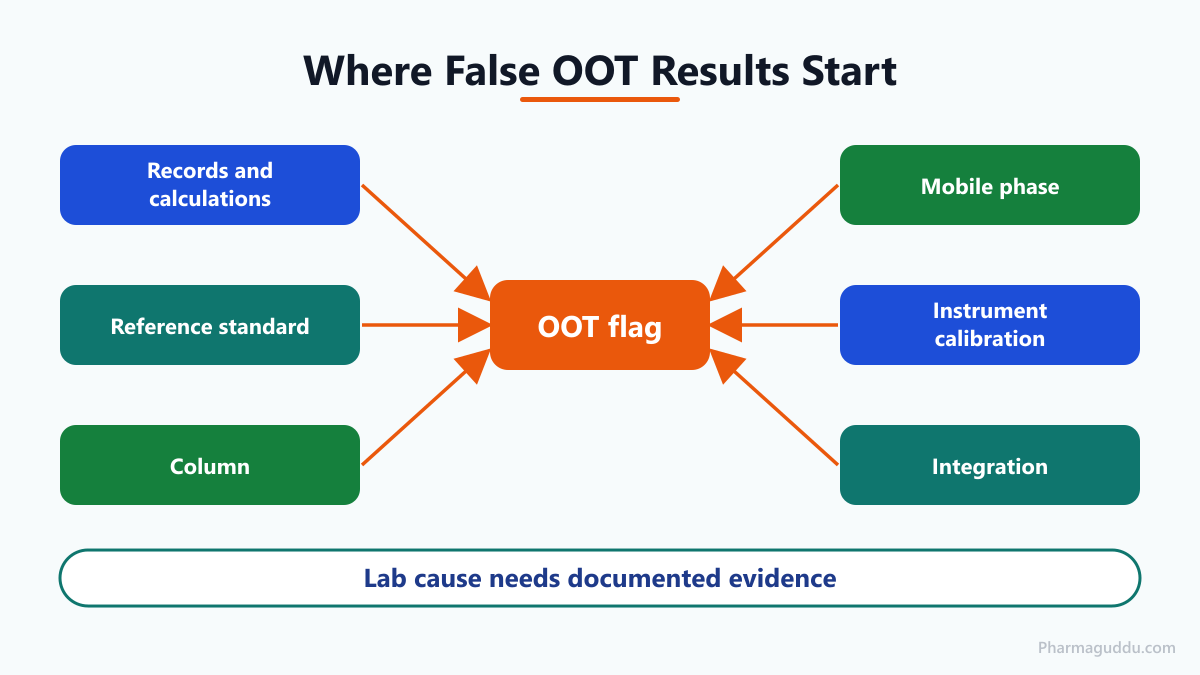
Which lab errors give HPLC false OOT results? A checklist of records, standards, column, mobile phase and integration checks, with fixes.
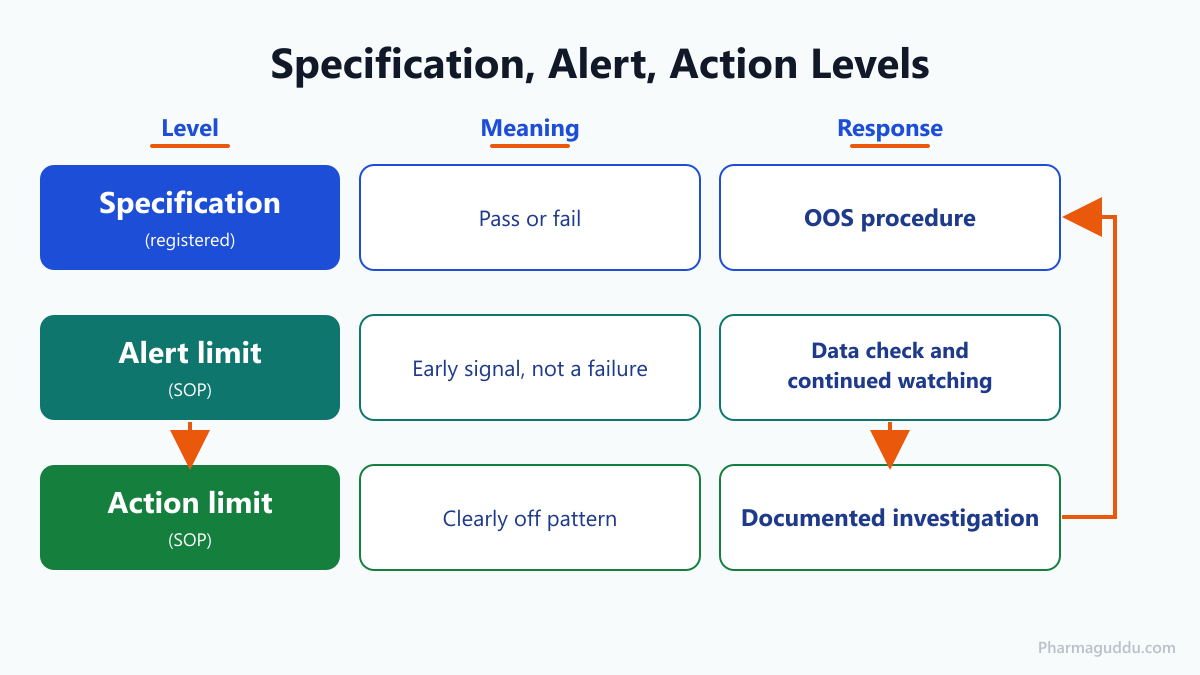
Alert limits give an early data check; action limits start a formal investigation. Learn how to set both for OOT trending and write them into the SOP.
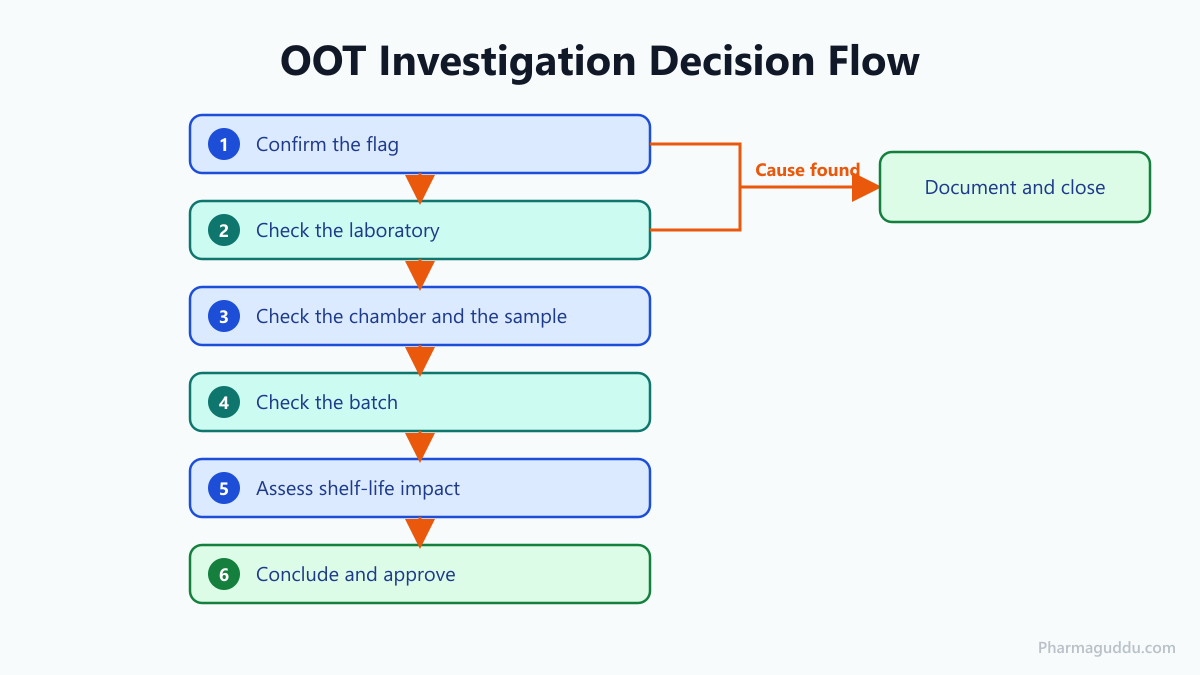
Learn the decision flow for an OOT investigation in stability studies, from the first flag to a documented conclusion and CAPA decision.
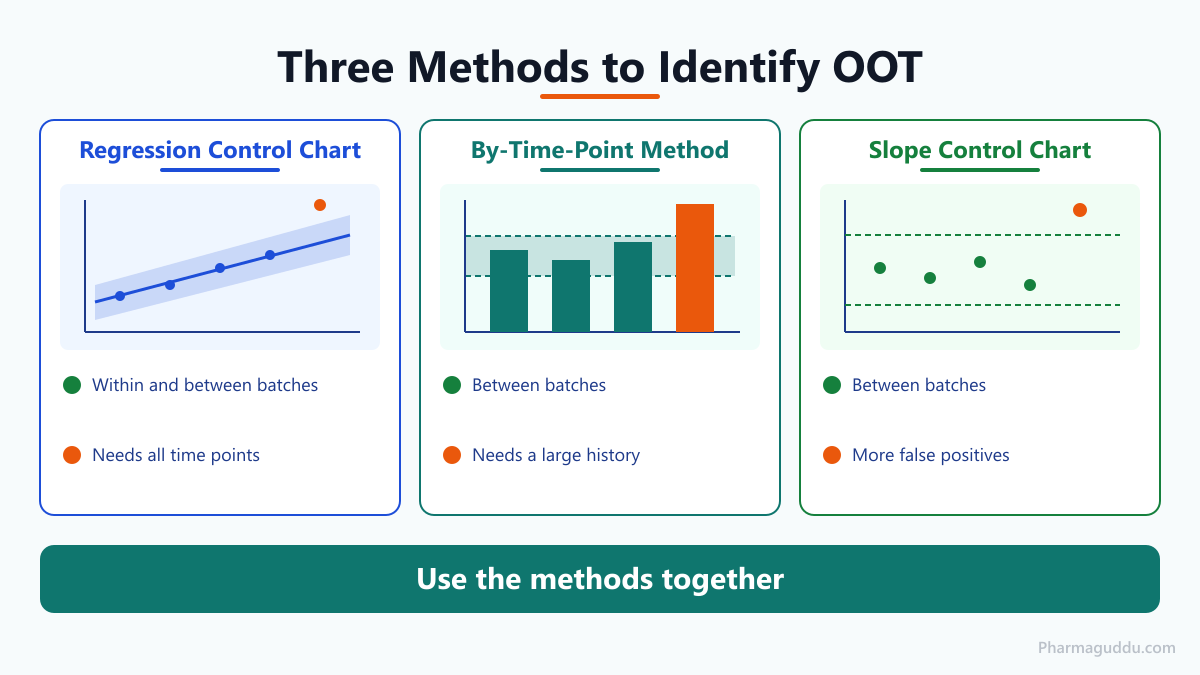
Learn how to find OOT in stability studies with regression, tolerance interval and slope methods, and follow a worked assay example.
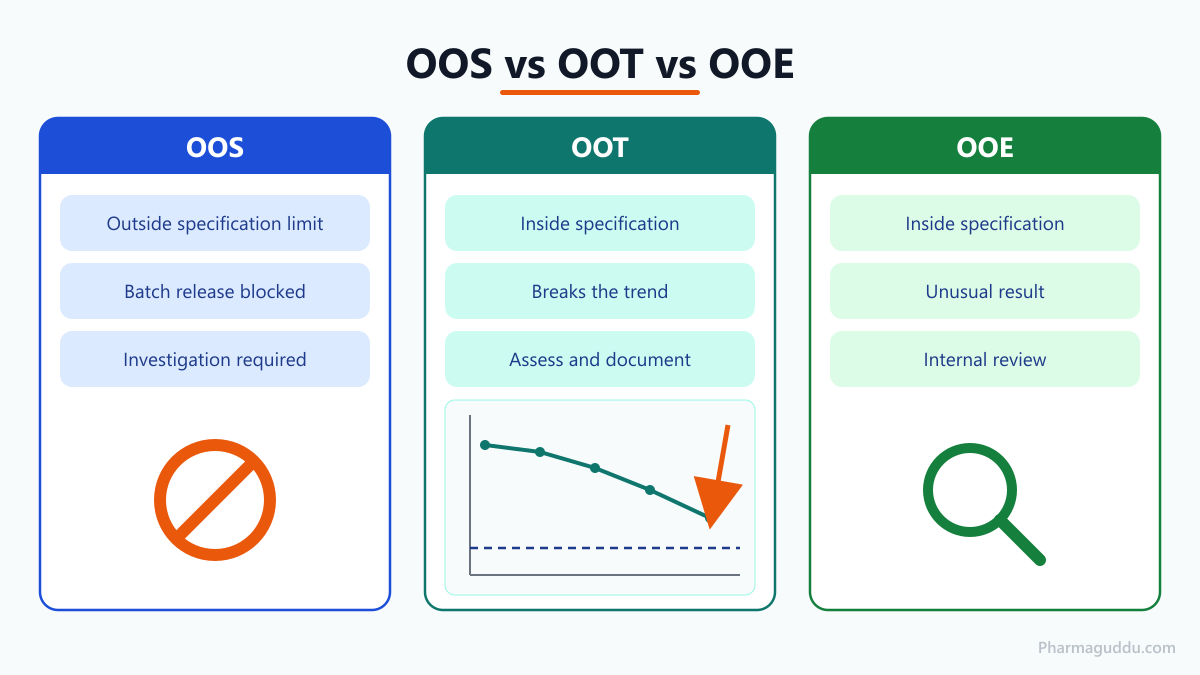
OOS breaks a limit and blocks release. OOT breaks a pattern and needs assessment. Learn the differences, investigation steps and release decisions.
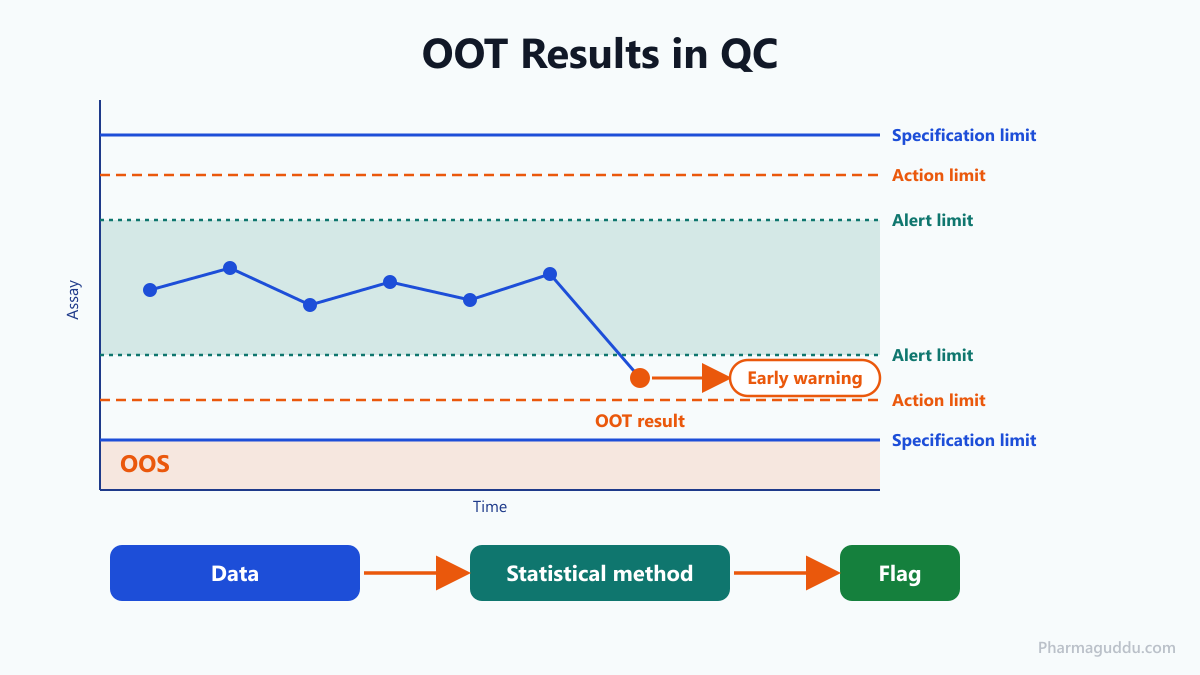
OOT results pass specification but break the usual pattern. Learn how to detect them, how they differ from OOS, and how to investigate them.
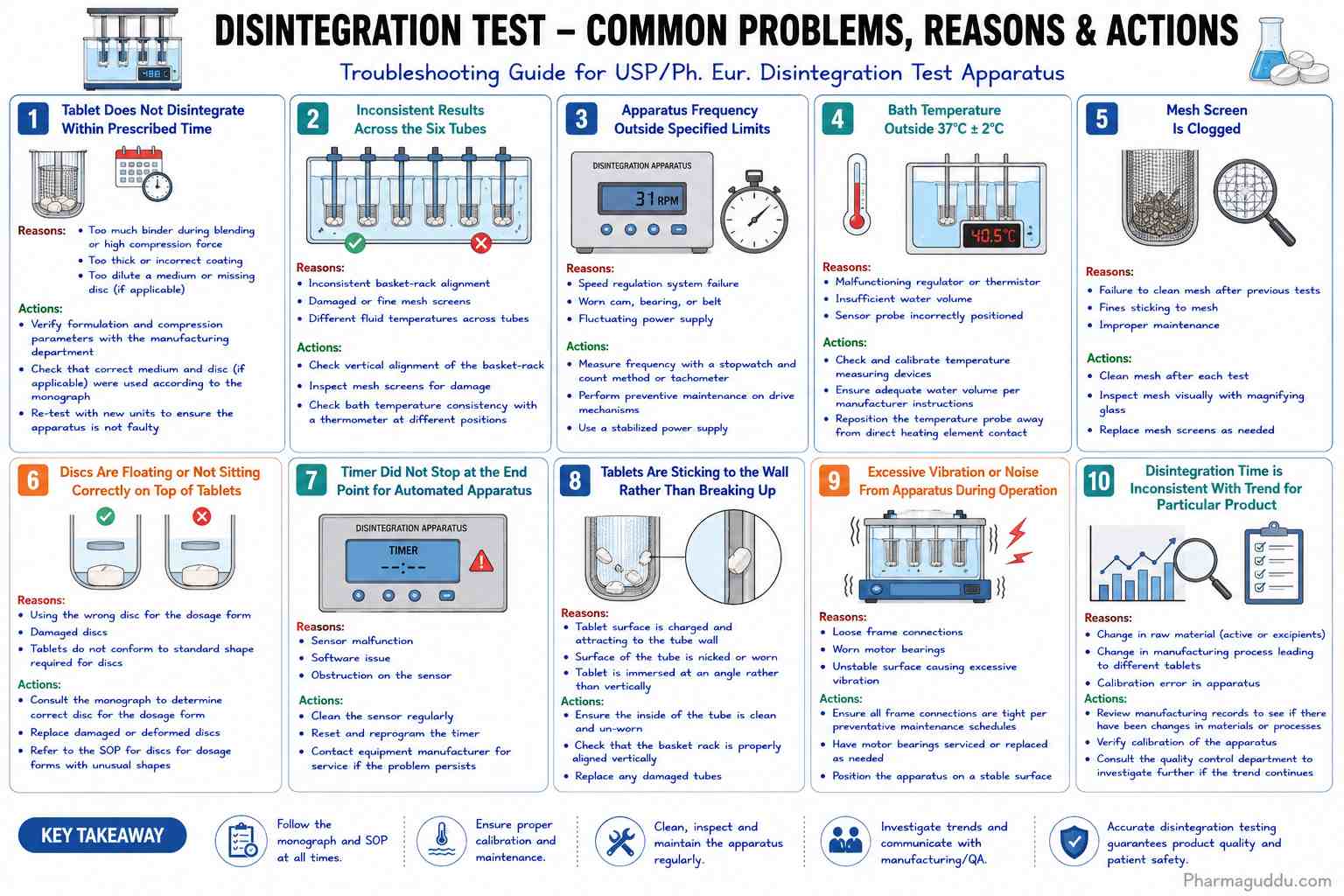
Have you ever asked yourself why a tablet, which has passed all the other quality control tests, fails the QC bench? A disintegration test apparatus is used to determine whether a tablet or a capsule disintegrates within a specified time under defined conditions. The test is performed by vertically reciprocating the unit in a liquid maintained at human body temperature. This article describes the working principle of the disintegration test apparatus, its components, the procedure for the disintegration test, calibration, and the disintegration limits set by the manufacturers for different dosage forms. This information will help QC and manufacturing personnel to perform the disintegration test properly and release the batches of the pharmaceutical products.
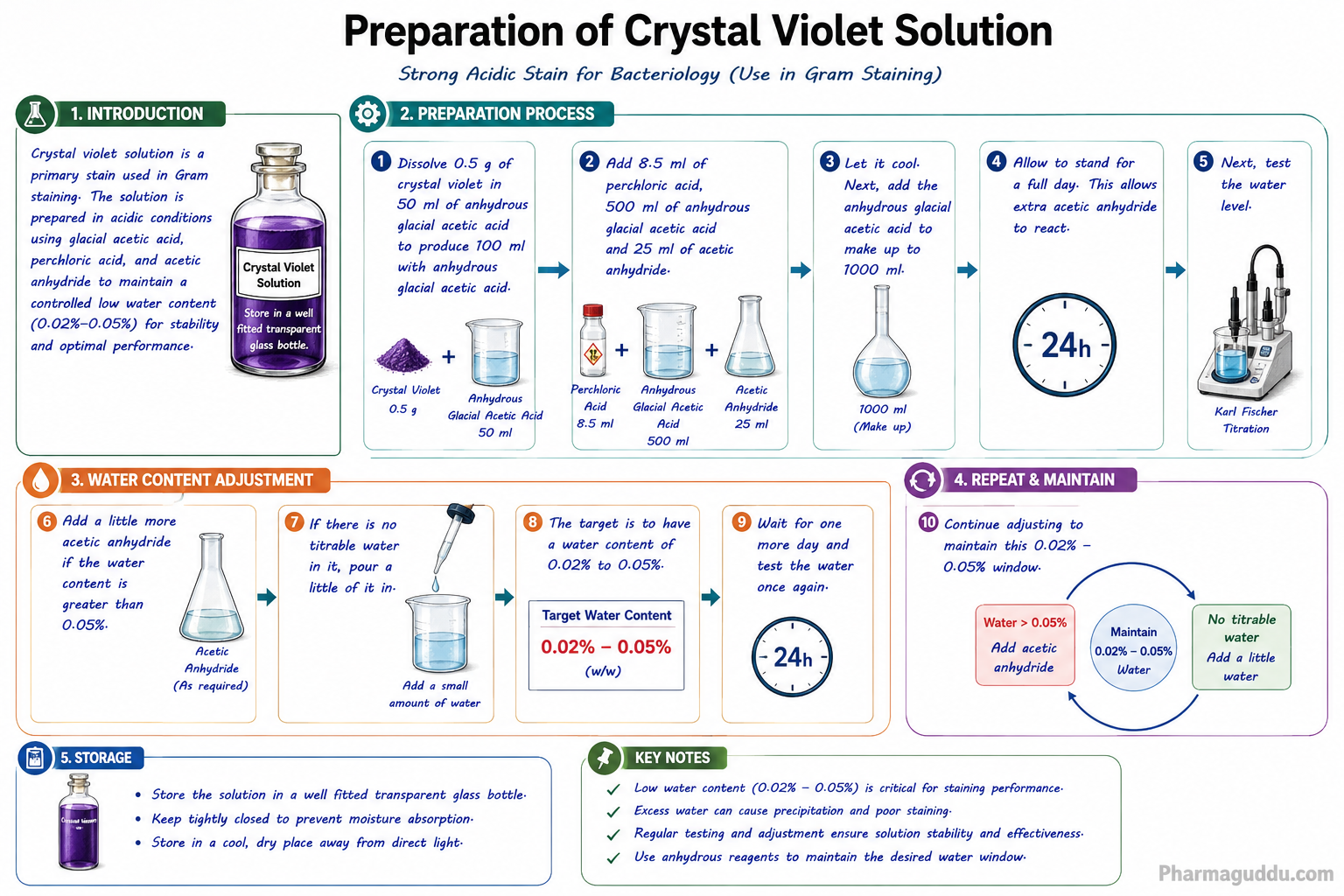
Know the step-by-step procedure used to prepare and standardize 0.1M perchloric acid solution as per IP guidelines. Incorporates reagents, equipment, calculation, detection of endpoint, storage of reagents, and standardization with potassium hydrogen phthalate (KHP).
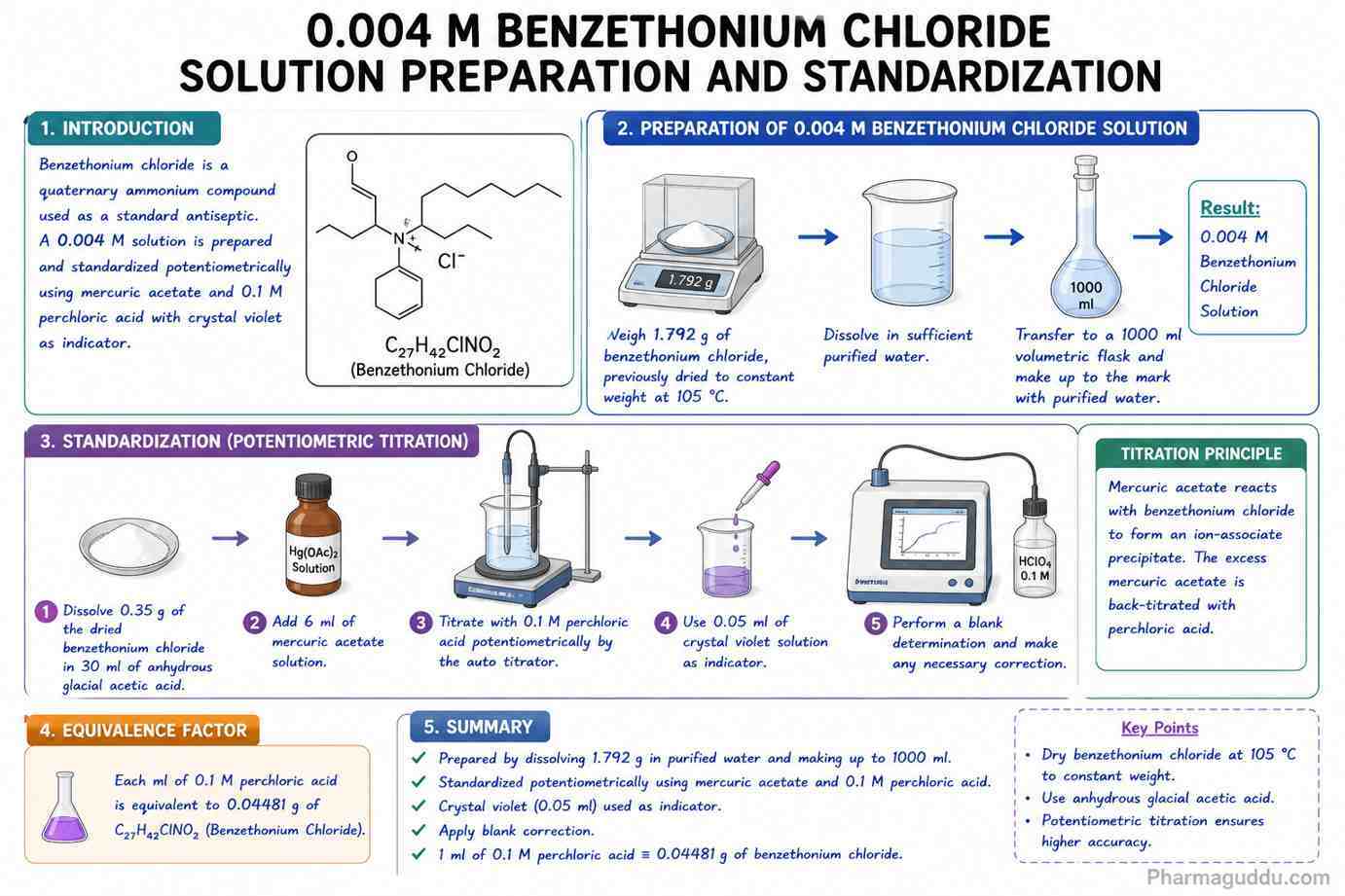
Preparation and standardization of 0.004 M benzethonium chloride solution with potentiometric titration with 0.1 M perchloric acid. It deals with preparation of reagents, calculation of standardizations, equivalence factor and recommendation on storage for pharmaceutical laboratory applications.
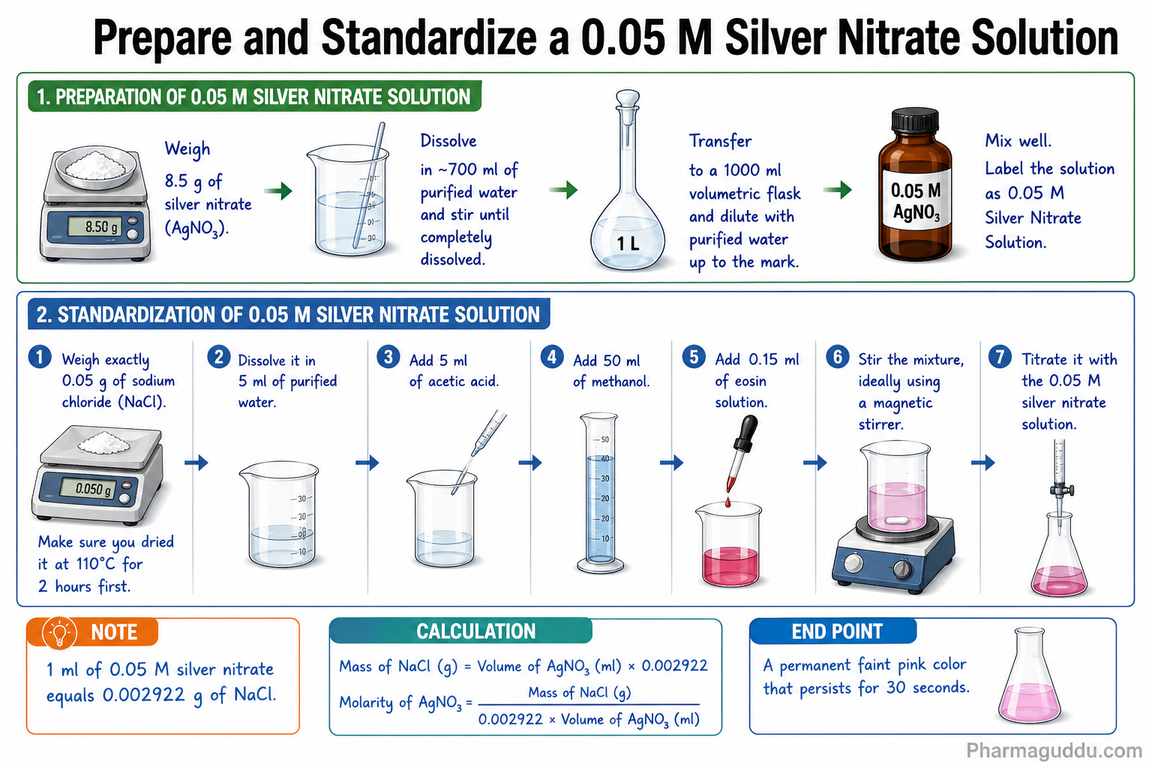
Here is the exact process for making and standardizing 0.05 M silver nitrate. Includes the chemicals, the titration procedure and the formula to calculate and storage condition
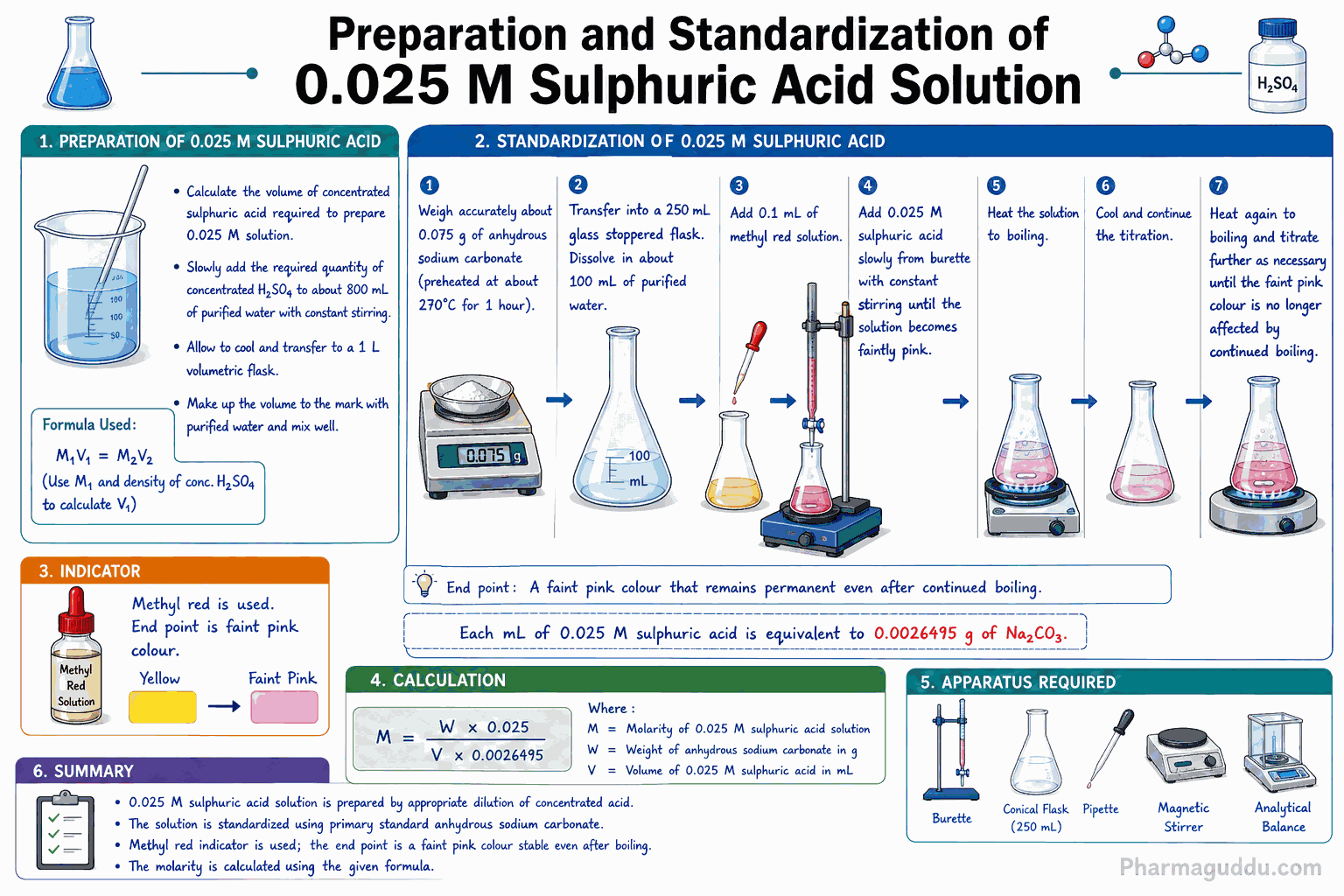
Know how to prepare 0.025 M sulphuric acid solution using anhydrous sodium carbonate, methyl red indicator, calculations and titration procedure.
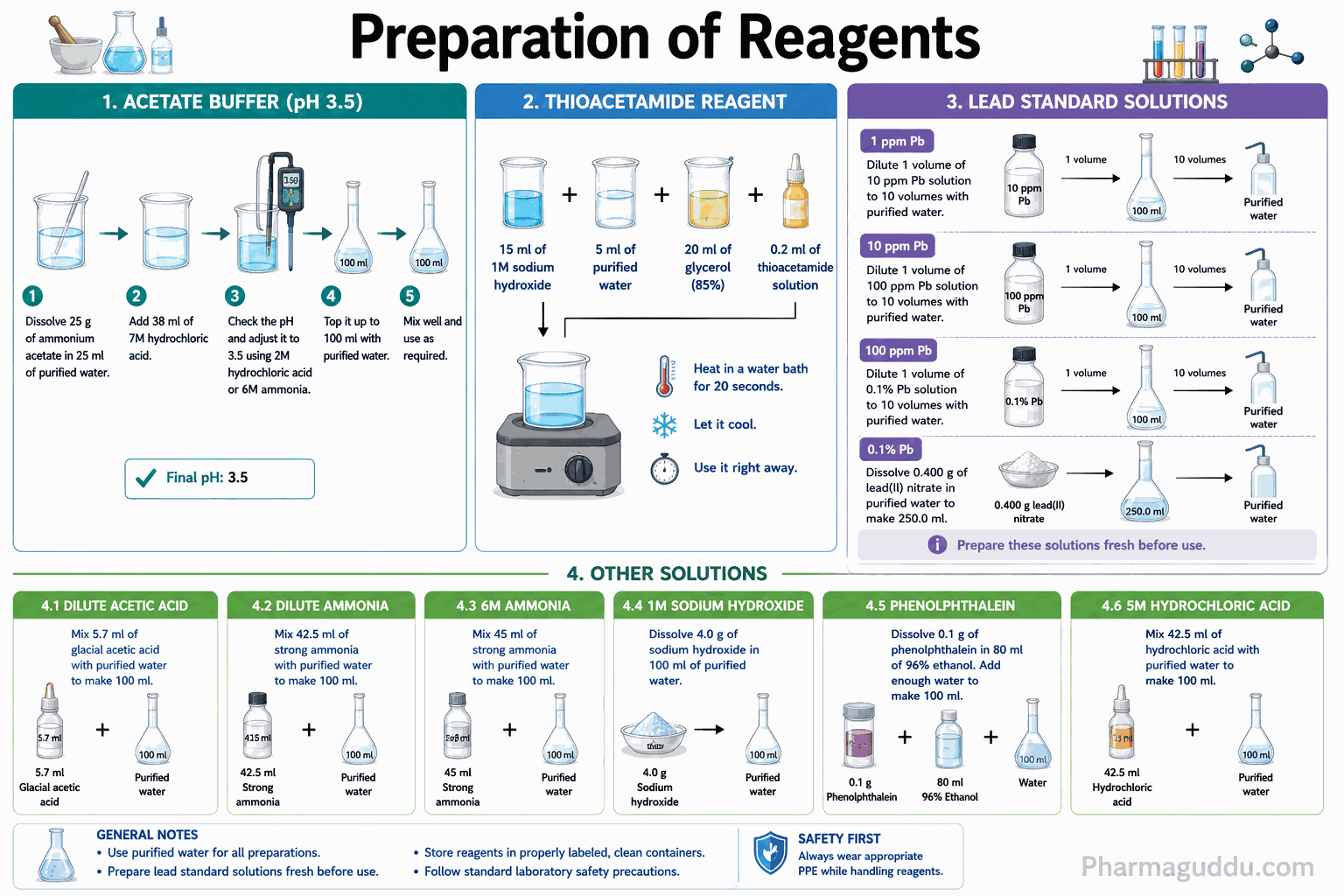
Limit tests for heavy metals need not be confusing. This guide includes detailed protocols with equipment, reagent preparation and step-by-step instructions to perform a typical test procedure. For all of the Test A, B, C and D options, there are clear instructions to ensure your pharmaceutical quality control is accurate and on track. 1.0 Scope: … Read more
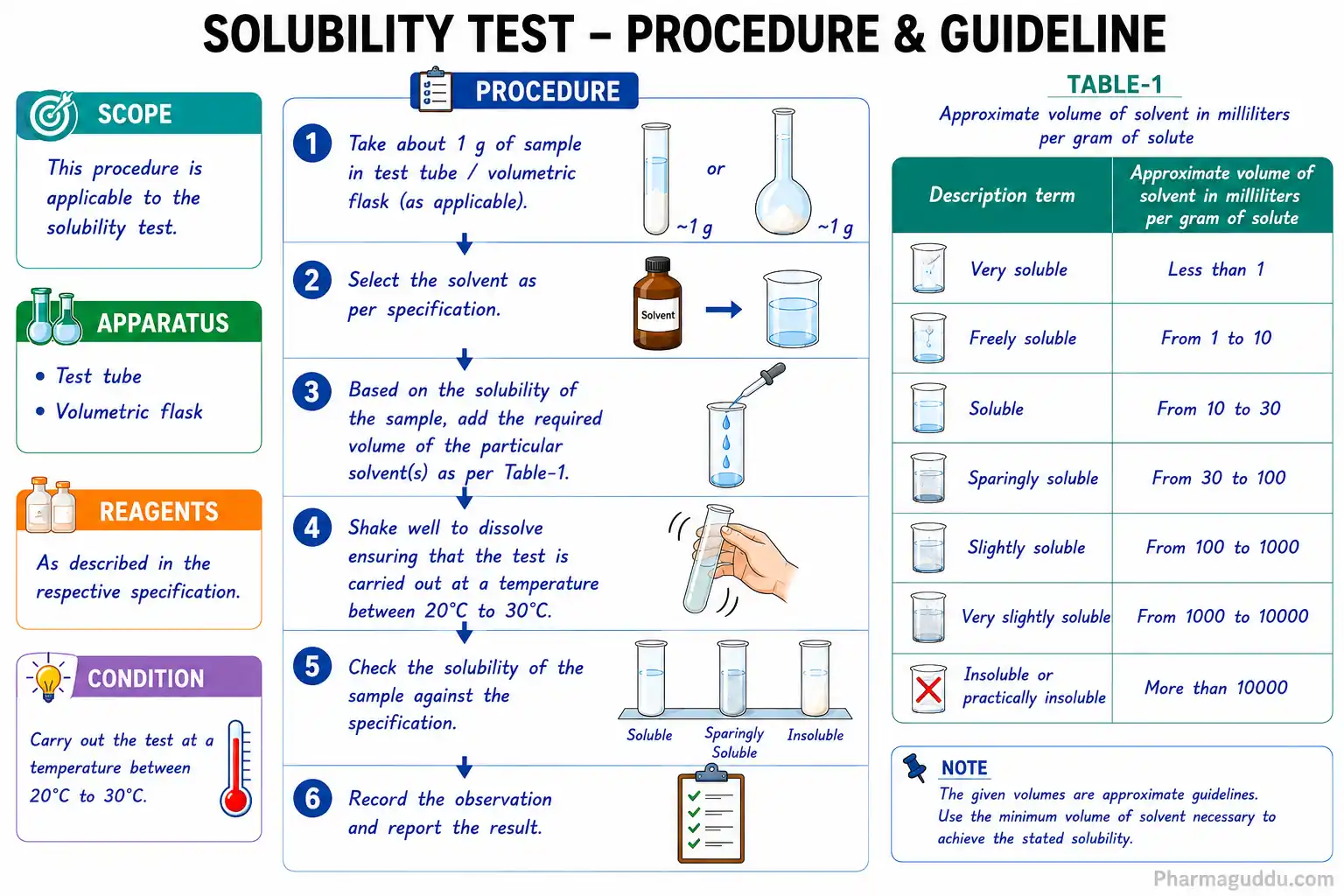
The solubility test is a basic test performed in the pharmaceutical laboratory to assess the solubility of a substance in a given solvent. This guide describes the entire solubility testing procedure, apparatus used, considerations for selection of solvents, temperature, and standard solubility classification from very soluble to practically insoluble. This step-by-step reference will help you to test accurately and fulfil the pharmaceutical quality requirements.
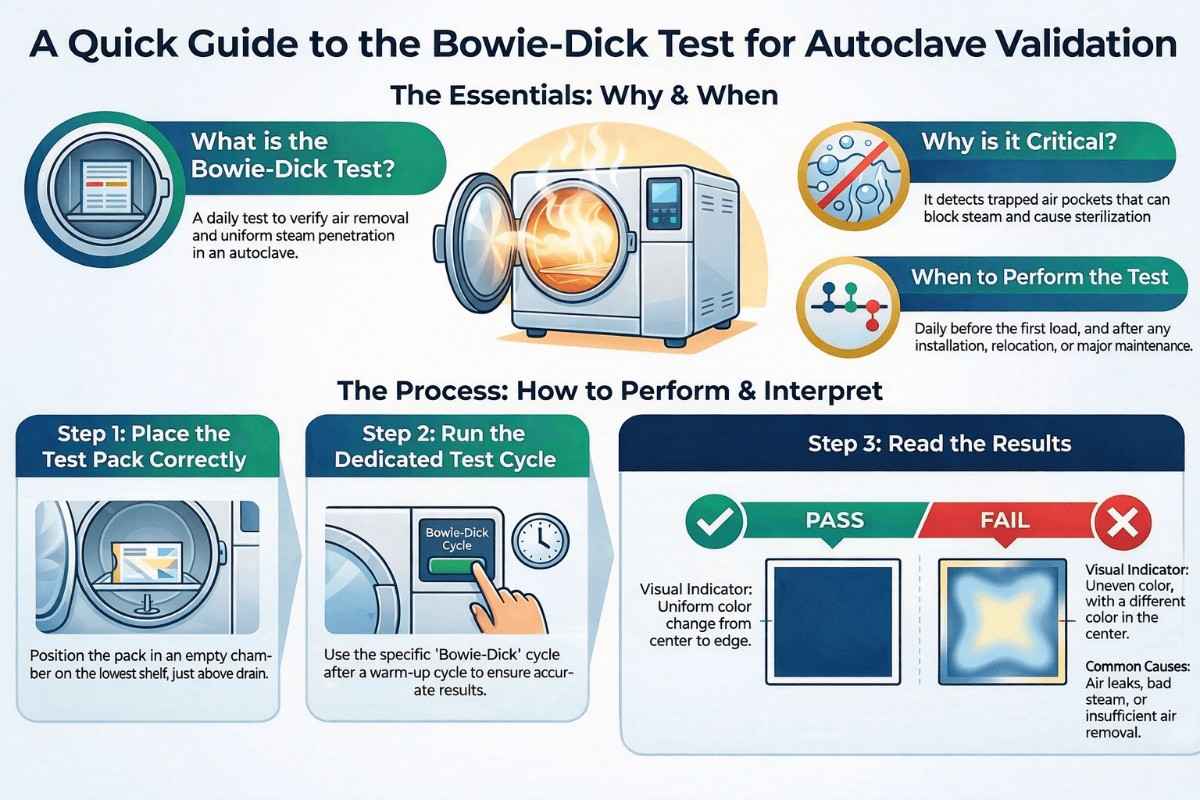
The penetration of steam into all parts of the autoclave is essential for achieving and maintaining effective sterilization. The Bowie–Dick test is performed to verify adequate air removal and uniform steam penetration within a pre-vacuum steam autoclave, using a standardized Bowie–Dick test pack. During sterilization, air pockets and non-condensable gases may remain trapped inside the … Read more
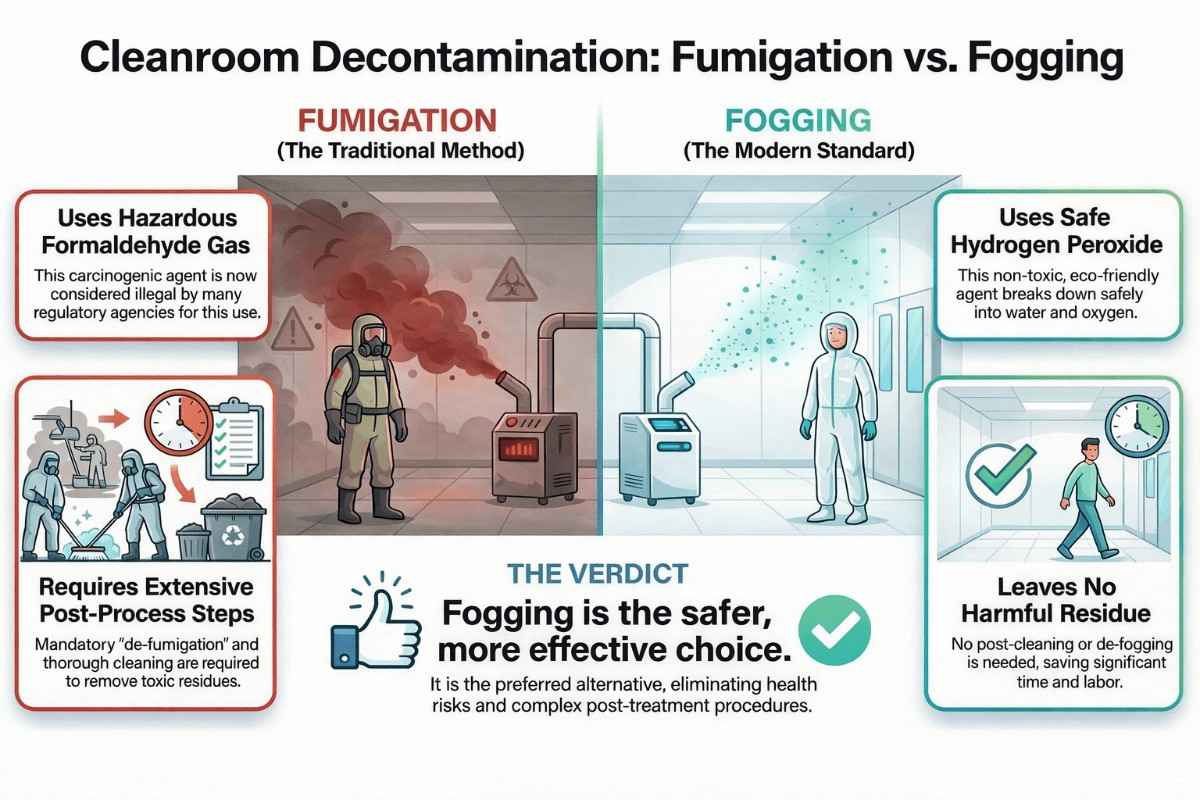
Fumigation and fogging are commonly used in pharmaceuticals to control microbial contamination in controlled areas. Fumigation is a gaseous sterilization process that kills microorganisms and prevents microbial growth in the air or on surfaces such as walls and floors. Fumigation agents, such as formaldehyde and potassium permanganate, are often used to control microorganisms. This technique … Read more