
GMP & Pharmaceutical Manufacturing Expert
✓ Reviewed by: Pankaj Sharma - Quality Control Specialist
Reviewed for Quality Control accuracy, laboratory practices, analytical methods, and technical relevance
📅 Last Updated: August 15, 2026
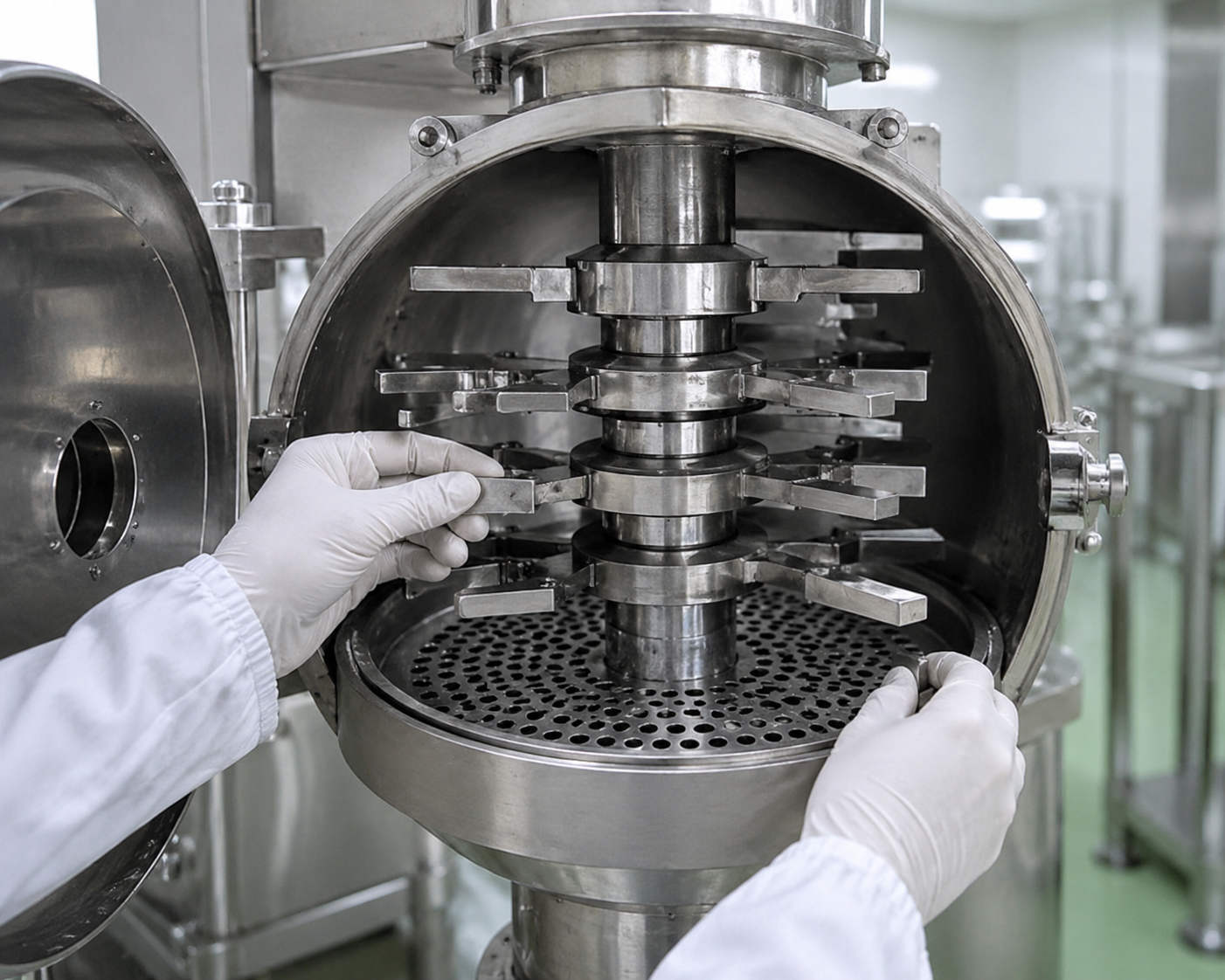
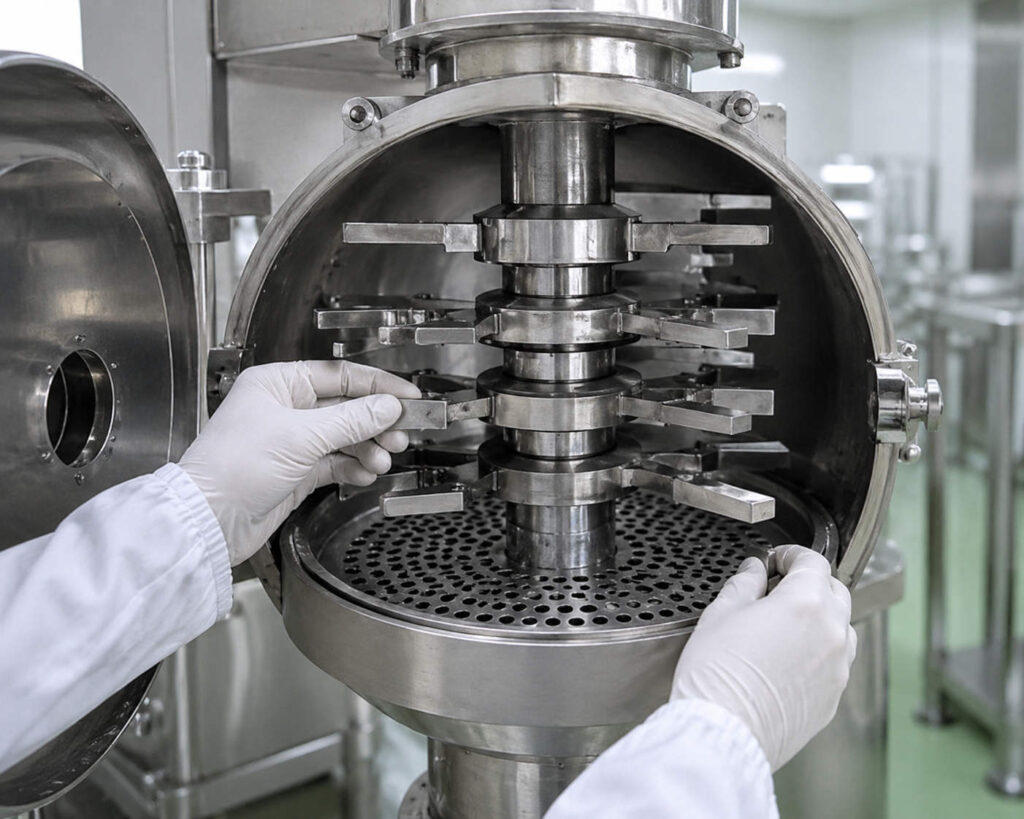
If your multimill is giving you oversized granules, too much fines, or batch-to-batch variation, it might have an easy fix such as worn blades, incorrect screening, or improper feed rate. This article focuses on some of the most common multimill problems in pharma granulation, why they occur, and how to address them before a whole batch is dumped.
Related Post: Multimill: Working and principle
Problem: Excessively large granules in the finished product
Possible Causes:
- Blades are worn/dull and not cutting/impacting material effectively
- Wrong sieve size is being used for the given specification
- Too much material going into the hopper causing overloading of the chamber
Corrective Actions:
- Check blades for wear and replace as required during routine maintenance
- Check that the sieve size is correct according to the batch record
- Reduce feed rate and reprocess the oversized fraction if required
Problem: Excessive fines generation
Possible Causes:
- High rotor speed for the material
- Blades were set in an impact (knife-backward) position for a material that requires a gentler cutting action.
- The material was reprocessed in the chamber for an extended period of time.
Corrective Actions:
- Decrease the RPM to within a lesser range
- Change the blade position to knife-forward to reduce the shearing action
- Decrease the amount of time that the charge was remaining in the chamber; do not over mill the charge
Problem: Screen blinding (reduced throughput, material buildup on screen)
Possible Causes:
- High moisture content of the feed material
- Too small openings in the screen for the sticky material
- The scraper blades are worn or not properly adjusted and do not effectively remove material from the screen
Corrective Actions:
- Check the moisture content of the feed material before milling and make sure it is within specifications
- Use a slightly larger aperture if the process allows for it
- Check and adjust or replace the scraper blades as needed
Problem: Excessive noise or vibration during operation
Possible causes:
- Worn bearings in the drive assembly
- Blade out of balance or loose
- Loose motor/drive belt
Corrective action:
- Bearing should be replaced during inspection and maintenance
- Check blade tightness and balance during maintenance
- Check, tighten, or replace drive belt during maintenance.
Problem: Motor overload or tripping during operation
Possible causes:
- Overfeeding the hopper
- Incorrect screen for feed rate and material
- Material too wet causing higher than normal resistance
Corrective action:
- Slow down feed rate or reduce amounts fed
- Use correct screen for feed rate and material
- Check upstream dryer if material is too wet
Problem: Product sticking inside the milling chamber
Possible Causes:
- High moisture or binder in wet mass
- Failure to clean chamber between batches
- High humidity in granulation room affecting hygroscopic nature of material
Corrective Actions:
- Check that moisture of wet mass is within specs as defined in granulation SOP
- Ensure proper cleaning of chamber between batches in accordance with cleaning SOP
- Maintain appropriate humidity in granulation room in accordance with environmental monitoring SOP
Problem: Metal or foreign particle contamination in milled product
Possible Causes:
- Blade or screen wear resulting into fine metal particle generation
- Loose fasteners in the milling chamber
- Damaged screen with torn perforations
Corrective Actions:
- Periodic inspection and replacement of blade and screen
- Checking of torque specification of fasteners as part of preventive maintenance
- Scrapping of damaged screen and investigation of cause before using the screen again.
Problem: Inconsistent particle size between batches of the same product
Possible Causes :
- Different operator using different feed rates
- Use of different screen or blades on different runs
- Variation in the incoming wet mass or end point of drying
Corrective Actions :
- Establishing standard feed rate and other relevant parameters in the batch record
- Have a dedicated set of screens and blades for each product
- Tight control of the granulation and end point of drying upstream.
Problem: Excessive downtime for cleaning between product changeovers
Possible Causes:
- Complex dismantling procedure not well understood by operators
- Inadequate cleaning tools or validated cleaning method
- Buildup in hard-to-reach areas of the chamber
Corrective Actions:
- Train operators to dismantle and clean the equipment per SOP
- Ensure that validated cleaning method and tools are available at the equipment
- Review design with engineering for cleaning access improvements if applicable
Related Post: Colloidal Mill: Common Problems, Causes, and Troubleshooting
Expert Tips
Tip 1: When using two different methods (wet and dry) of granulation on the same mill, it is important to double-check blade orientation when switching from one method to the other. Wet mass that is processed with a knife-backward configuration will be over-puréed and result in excessive fines.
Tip 2: It is good practice to keep a log of dates when each screen is replaced and how long the screen was used for. Inconsistencies in the size of finished material from one batch to the next often stem from screens that have exceeded their recommended run time.
Tip 3: When encountering sporadic motor overloads, check if the cause stems from irregular feeding first before looking into motor issues. Uneven feeding from manual addition of the charge is a more likely culprit than mechanical failures.
Tip 4: When transferring processes to a new mill or scaling up, make sure to note down not only the milling speed but also the blade orientation and screen size. A change in milling equipment necessitates a change in all three factors, as only a combination of speed, screen and blade orientation produce similar results.
Tip 5: When dealing with cohesive, high-binder wet granules it is often better to decrease the milling speed while retaining a knife-forward orientation rather than trying to increase the throughput.
Tip 6: Make sure to include blade and screen inspection as a separate item on your line clearance checklist. A faulty screen that makes its way into a batch unnoticed can be exceptionally difficult to spot after the fact.

Naresh Bhakar is the Founder and Author at Pharmaguddu.com, bringing his extensive expertise in the field of pharmaceuticals to readers worldwide. He has experience in Pharma manufacturing and has worked with top Pharmaceuticals. He has rich knowledge and provides valuable insights and data through his articles and content on Pharmaguddu.com. For further inquiries or collaborations, please don’t hesitate to reach out via email at [email protected].