
Cleaning Validation Master Plan (cVMP)- A Right Approach

A cleaning Validation Master Plan (cVMP) is a very important document that is needed to be in place during the cleaning validation process. Below read the all content that helps to prepare a well-documented validation plan. PROTOCOL CONTENTS S. No. SECTION TITLE 1.0 APPROVAL 2.0 INTRODUCTION 3.0 PURPOSE 4.0 SCOPE 5.0 RESPONSIBILITIES 6.0 STRATEGY 6.1 … Read more
Role of Drying in Pharmaceuticals

Drying is a process that involves the removal of water or other solvents through evaporation from solid, semi-solid, or liquid substances by applying heat to get dry solid mass or powders. Below is a detailed discussion on Drying, its application, Objective, mechanism, Theory, Rate of drying curve, formula, and equipment used. Objectives of Drying In … Read more

Transdermal Patches: Working, advantages, applications, and types

Transdermal patches are used on the skin to deliver medicines directly into the bloodstream. In this article, read about transdermal patches, their working mechanism, advantages, applications, types, application methods, and safety considerations. What are Transdermal Patches? They are thin, adhesive patches that are applied directly on the skin to deliver medication. Transdermal patches are useful … Read more

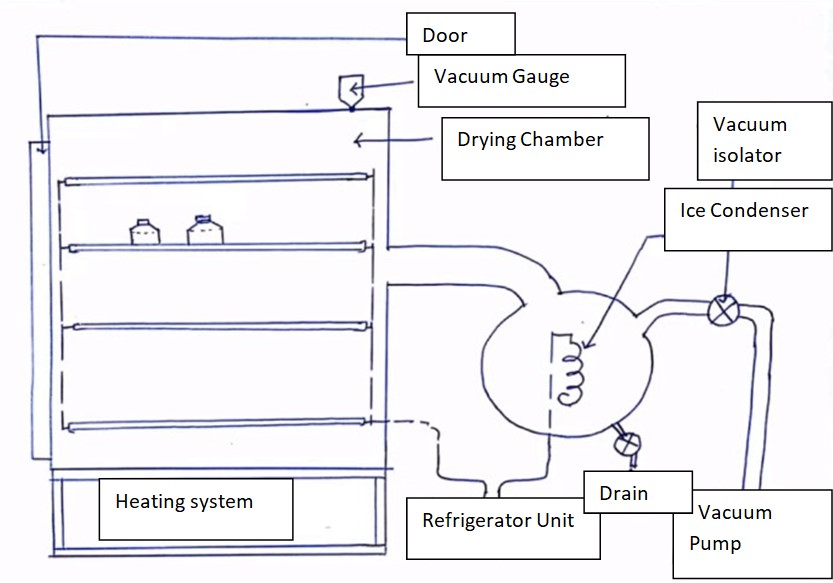
Freeze Dryer: Principle, Construction, and Working

Freeze Dryer Diagram

Freeze drying also known as lyophilization, involves freezing water and removing it from a sample through sublimation. It is widely used in the pharmaceutical and biological industries to preserve thermolabile substances. In this article, Read the Principles, Construction, Working of Freeze Dryers, Advantages and Disadvantages. Principle of Freeze Dryer: Freeze drying is also known as … Read more

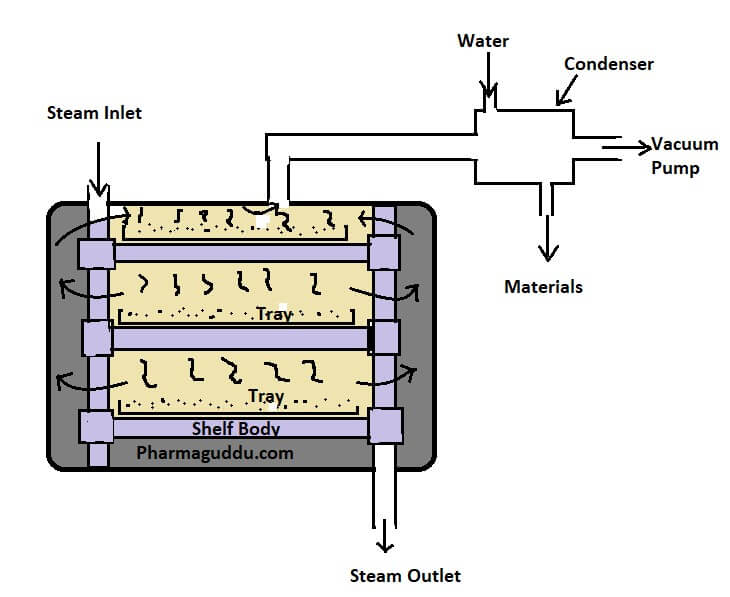
Vacuum Dryer: Principle, Construction, Working, Advantages, Disadvantages, and Usage

Vacuum Dryer

A vacuum dryer is an effective equipment used in many industries, for example, pharmaceuticals, food processing, plastics, and textiles. Inside this equipment, vacuum is used to dry materials that are heated at low temperatures to easily evaporate. In this article learn about Vacuum Dryer and their Principle, Construction, Working, Advantages, Disadvantages, and Usage Principle of … Read more

Spray Dryer: Principle, Construction, Working, Advantages, and Disadvantages

A spray dryer is an instrument used to dry a liquid feed, for example; solution, suspension, or paste, into dried particles by spraying the feed into a hot drying medium. In this article learn about their Principle, Construction, Working, Advantages, and Disadvantages. Principle of Spray Dryer: The principle of spray drying involves transforming a liquid … Read more

Mixing – Pharmaceutical Engineering a Complete Guidance

In this section, we will explore the objectives, applications, and different factors which affect the mixing process, as well as the mechanisms involved in solid, liquid, and semisolid mixing. We will also discuss the principles, construction, working, uses, merits, and demerits of various mixers commonly used in different industries. Definition Definition: Mixing (or blending) is … Read more

Sigma Blade Mixer for Mixing

The Sigma Blade Mixer is one of the most popular mixers for blending and kneading materials with high viscosity. It is a double-arm kneader mixer used in handling high-viscosity materials. Principle behind the Sigma Blade Mixer The principle involved in these mixers, which handle highly viscous materials, depends on shearing and convecting generated by interlocking … Read more

Ribbon Blender: Principle, Construction, Working, Varients, Advantages, and Disadvantages

The Ribbon Blender is a mixing device that operates on the principle of shear and convective mixing. Principles of Ribbon Blenders: Related: Size Reduction Construction of Ribbon Blenders: A ribbon blender consists of a U-shaped horizontal trough or shell that contains a helical double-ribbon agitator rotating inside it. The agitator’s shaft is positioned at the … Read more