Inlet Air Handling Unit of a Fluid Bed Processor: Filters, Dehumidification and Heating
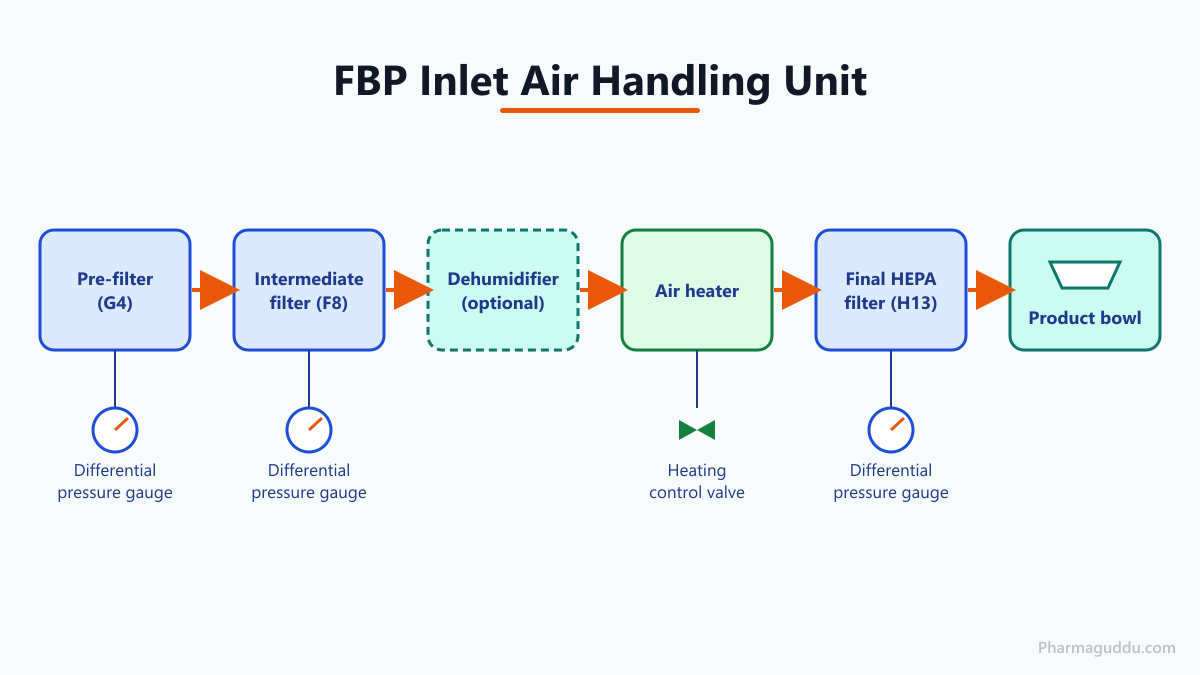
How the inlet air handling unit of a fluid bed processor filters, dehumidifies and heats process air, with each component, its controls and common faults.
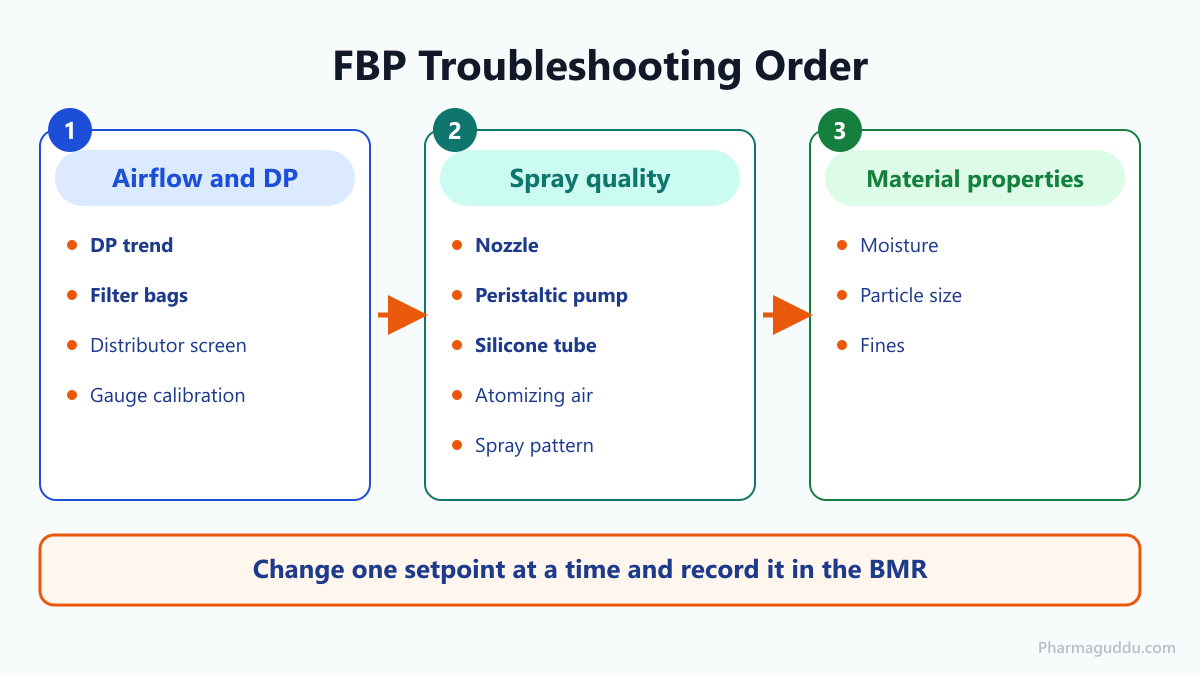
Cause-and-fix guide to fluid bed processor faults: differential pressure, spray nozzle, dust leaks and inlet air temperature and humidity.
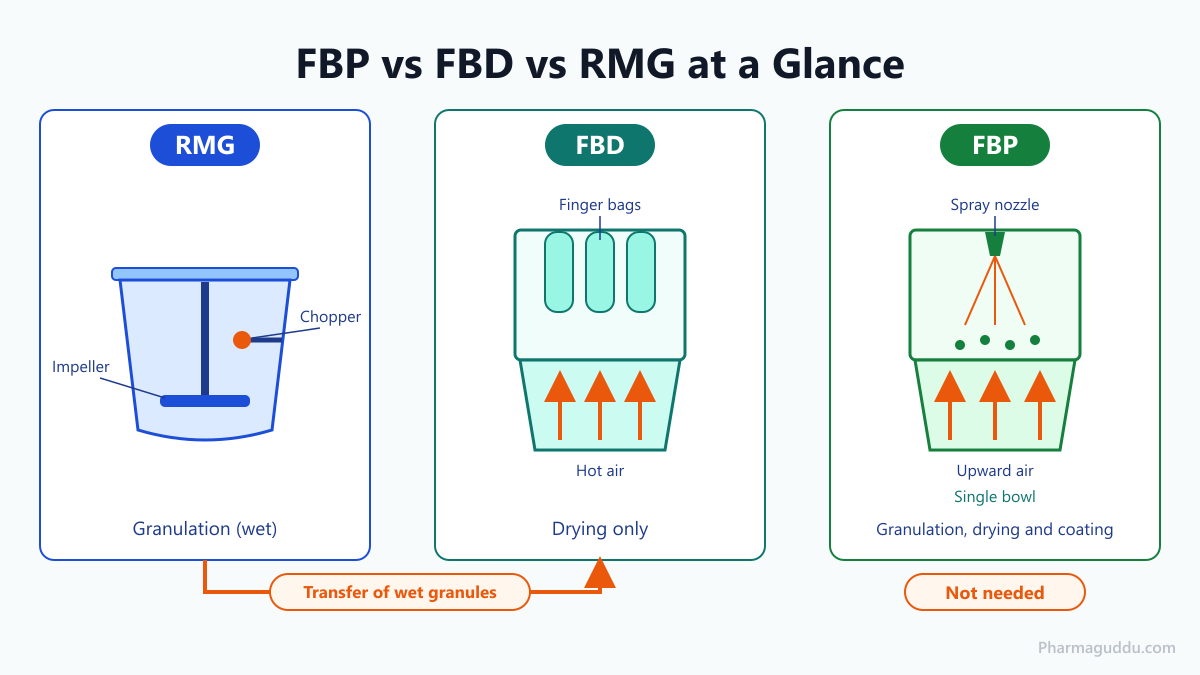
Compare a fluid bed processor, fluid bed dryer and rapid mixer granulator: how each works, transfer, cleaning, end points and when to choose each.
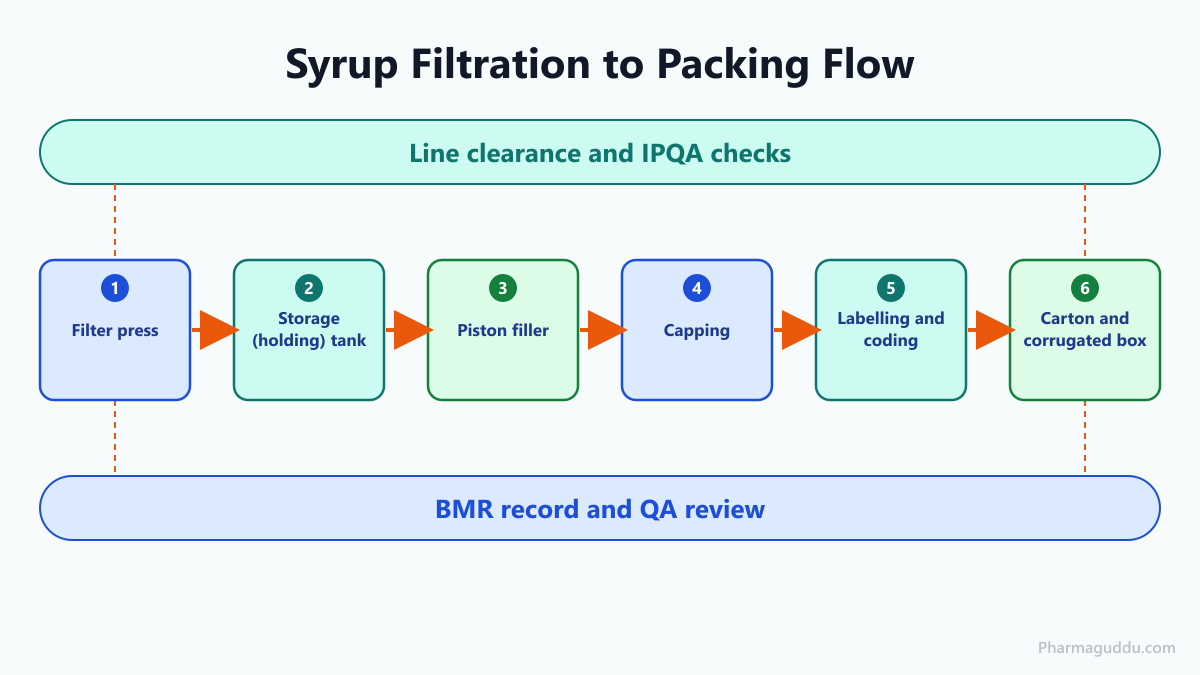
Syrup filtration and filling after mixing: filter press, holding tank, bottle filling, capping, cartoning, IPQA checks and common problems.
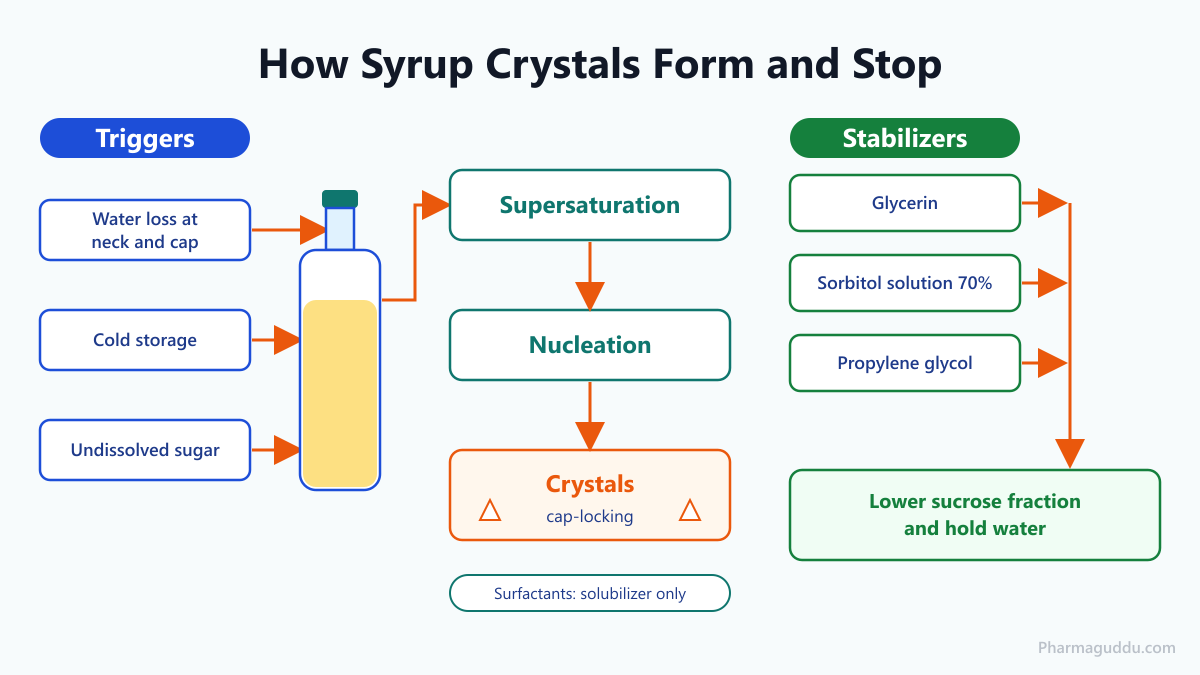
Why sucrose crystallizes in syrup and how glycerin, sorbitol and propylene glycol, correct °Brix control and filtration keep it clear.
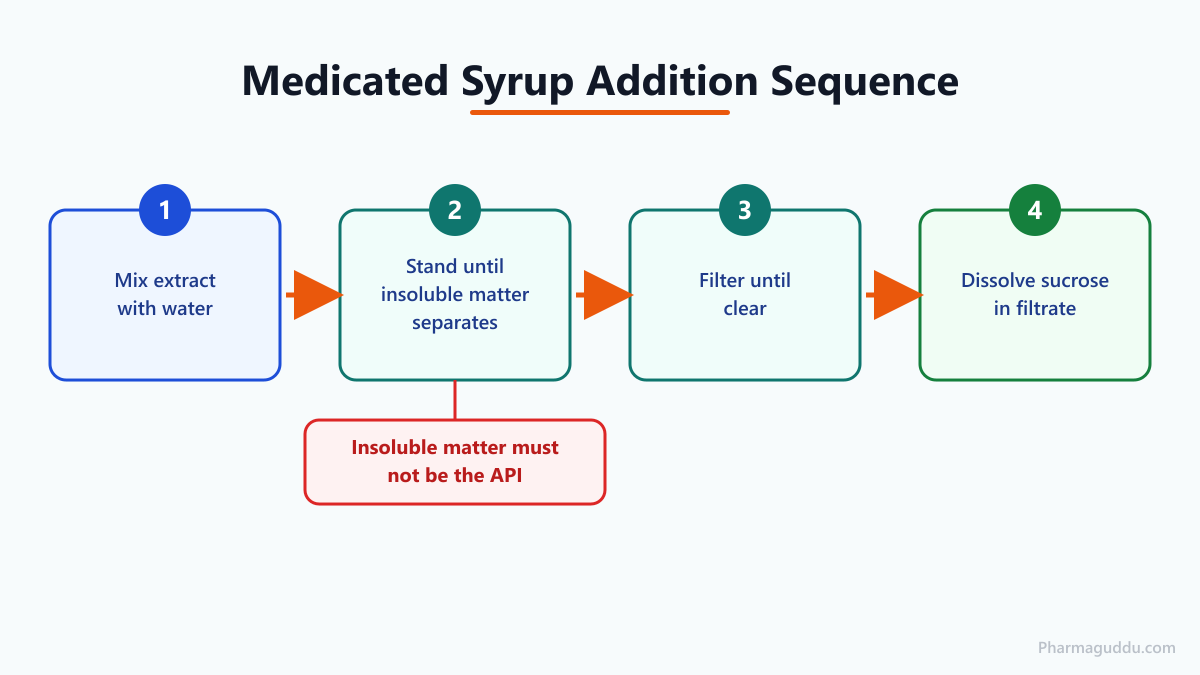
The addition of medicated syrup method: dilute the extract with water, let insoluble matter settle, filter, then dissolve sucrose in the filtrate.
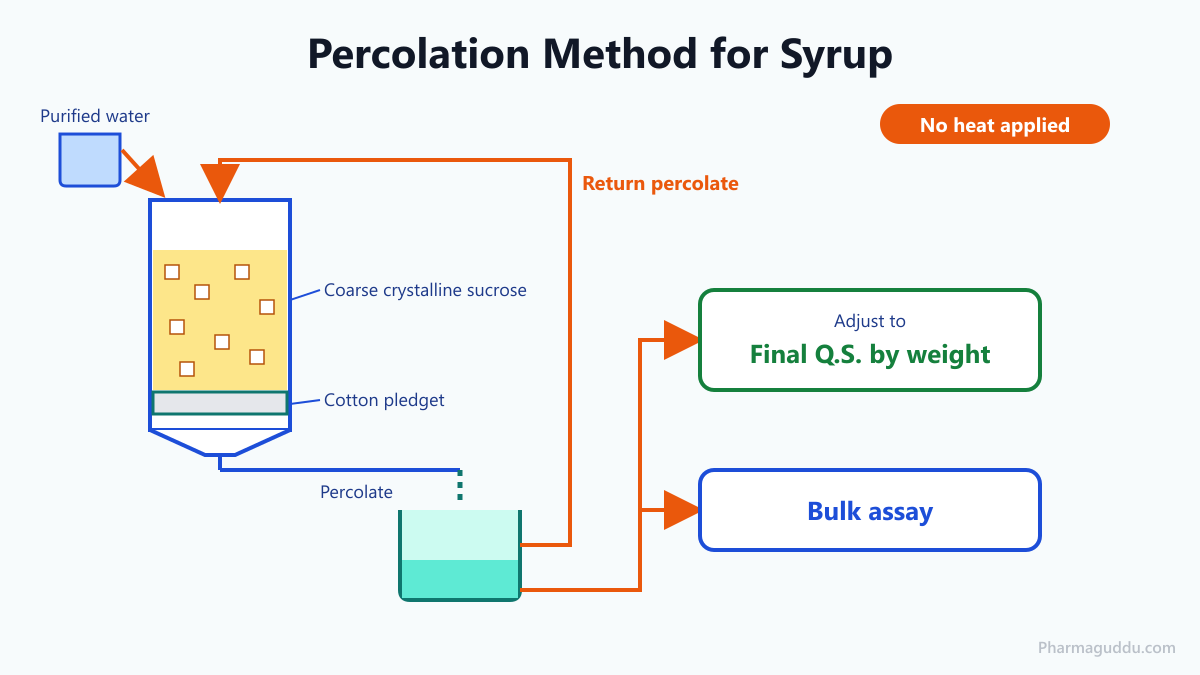
The percolation method for syrup passes purified water through coarse sucrose in a percolator with no heat. Set-up, API addition, controls and comparison.
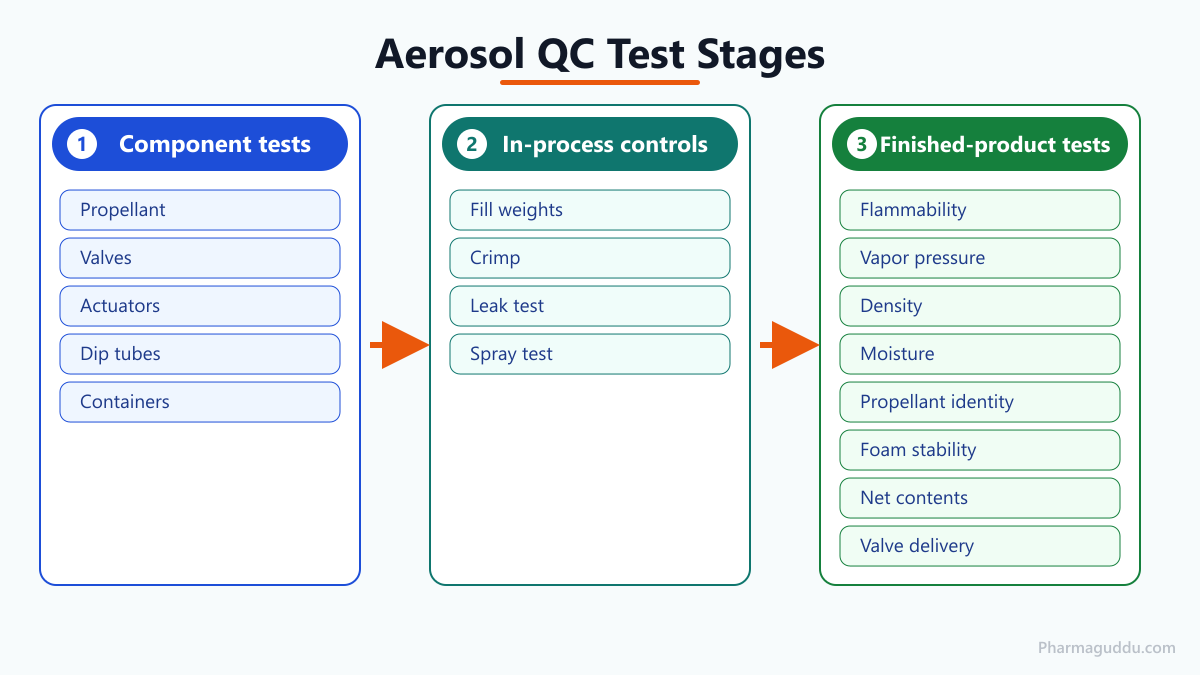
Method-level guide to aerosol QC: flammability, vapor pressure, density, moisture, propellant identity, foam, leak and valve delivery tests with apparatus.
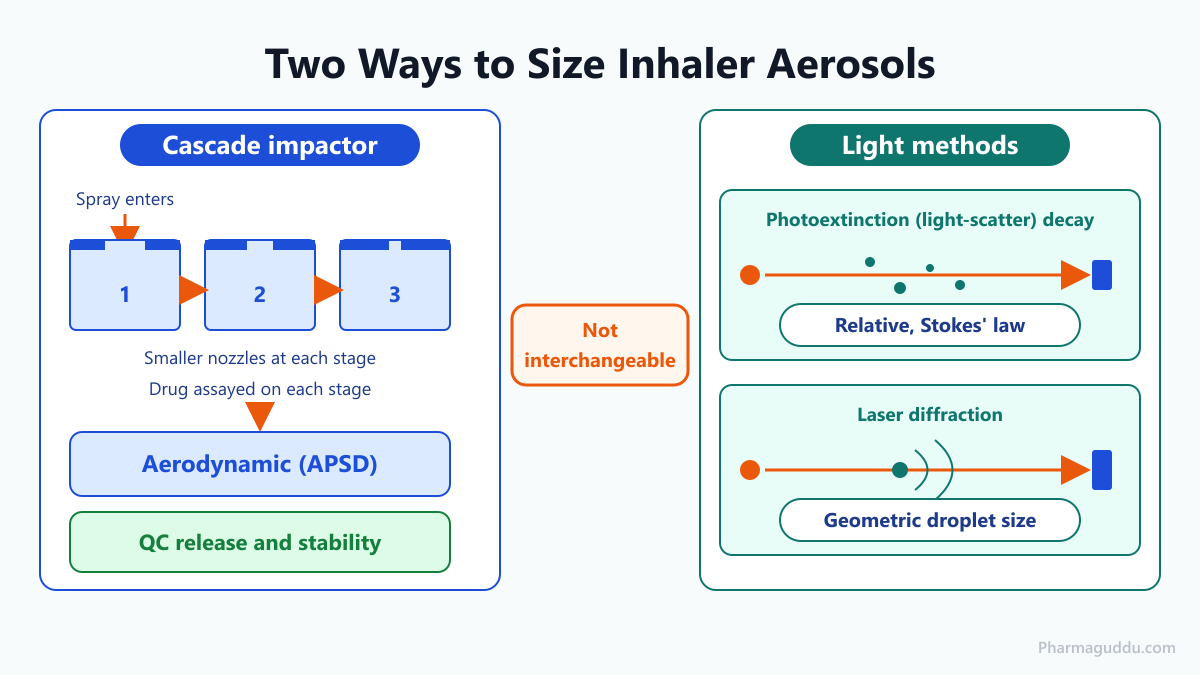
How a cascade impactor and light scattering decay measure inhaler aerosol size, and how MMAD, GSD and FPF are read from the results.
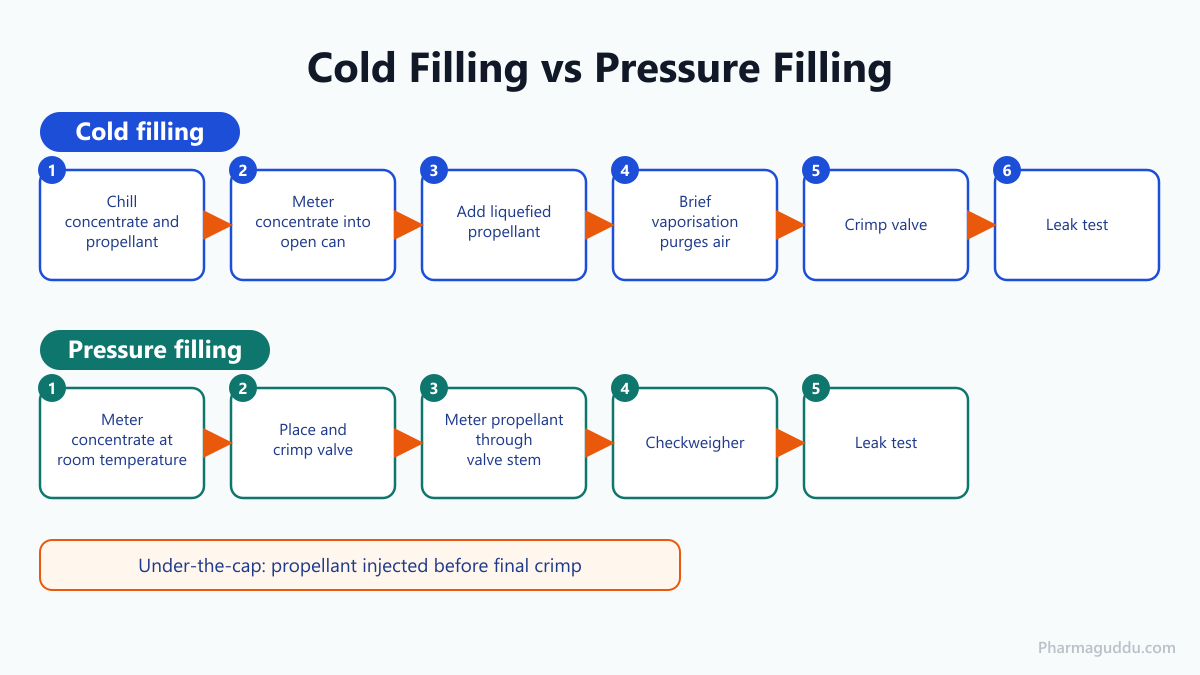
How cold filling and pressure filling of pharmaceutical aerosols are run, which products suit each and why cold filling fails for aqueous products.
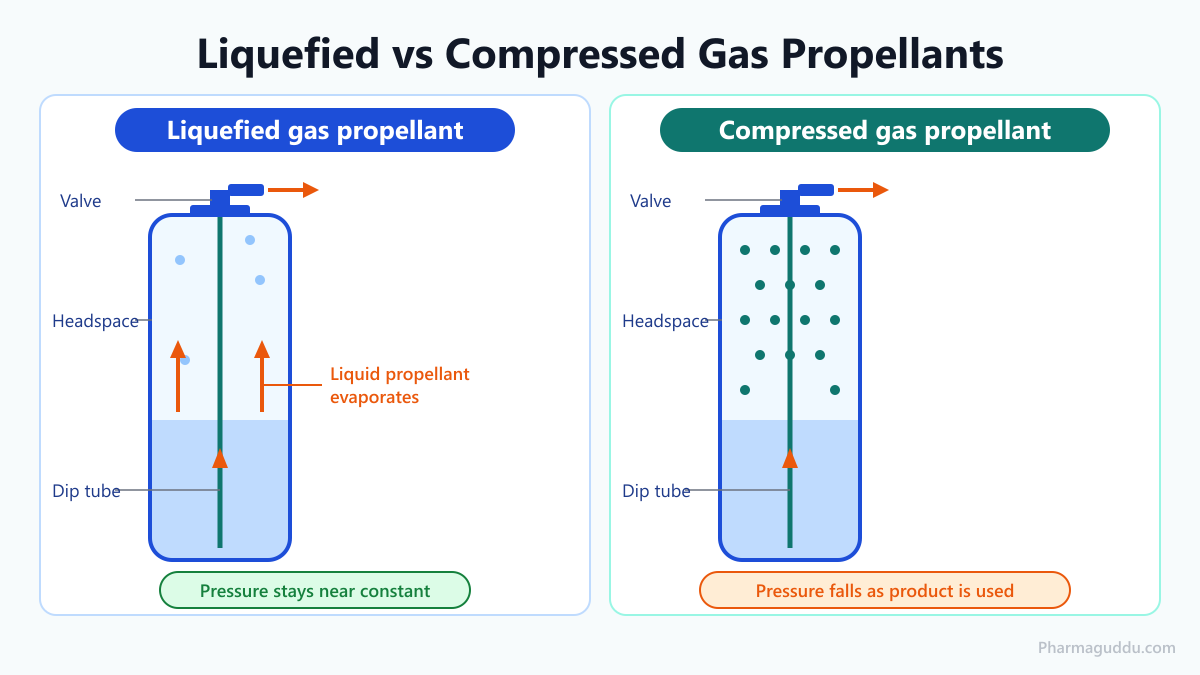
How liquefied and compressed gas propellants work, why CFCs were replaced, and how hydrocarbons, DME and HFAs compare on flammability and medicinal use.